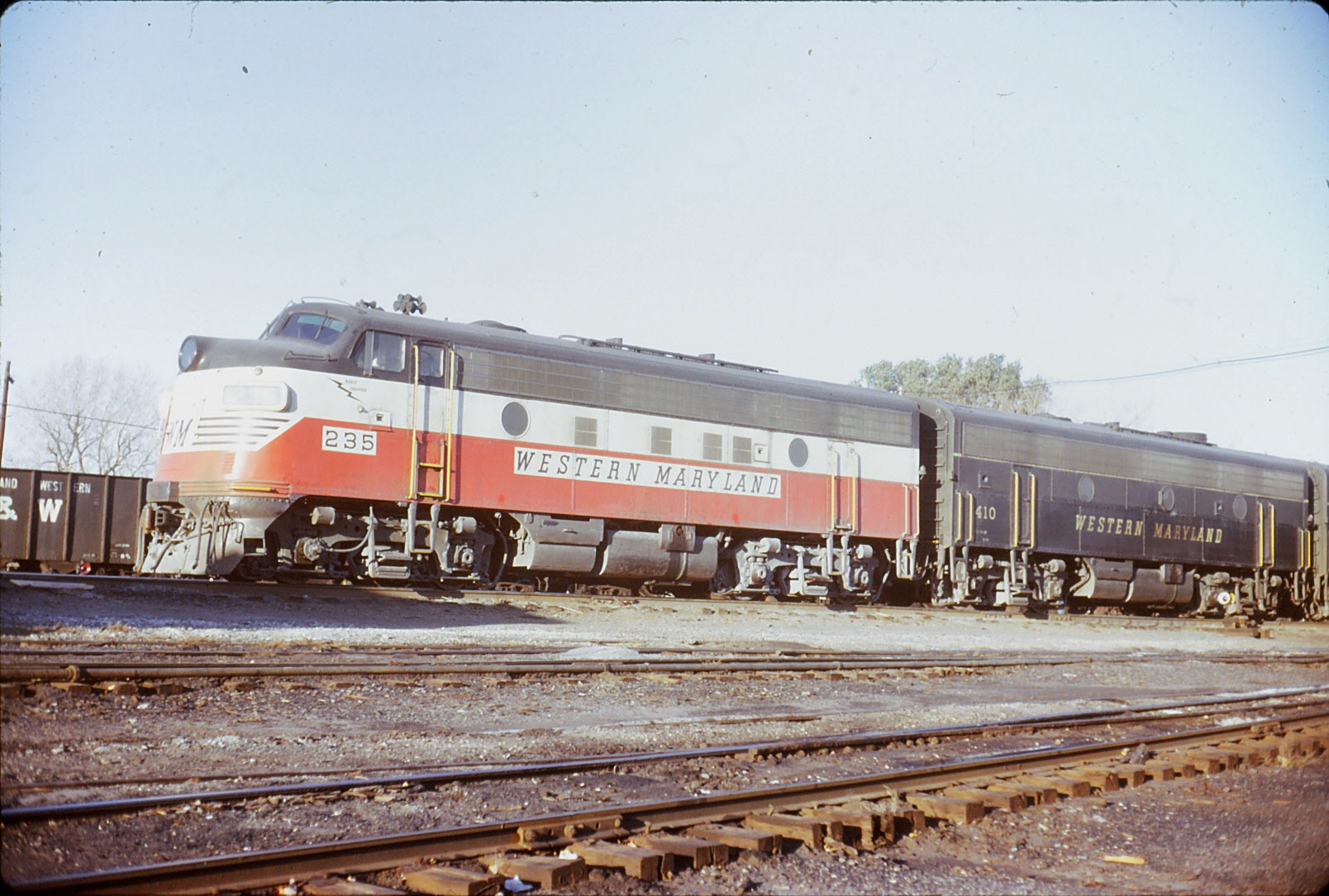
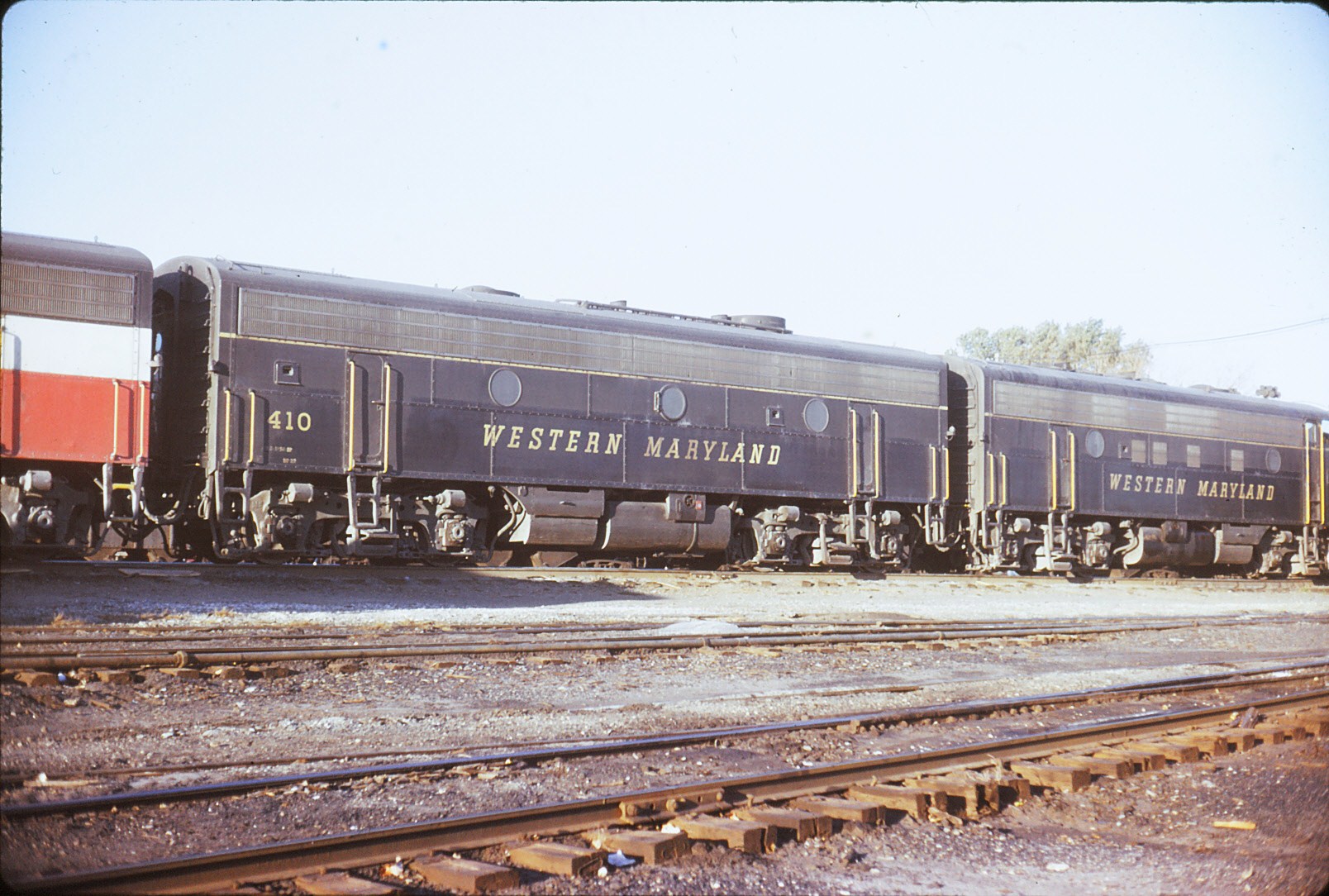
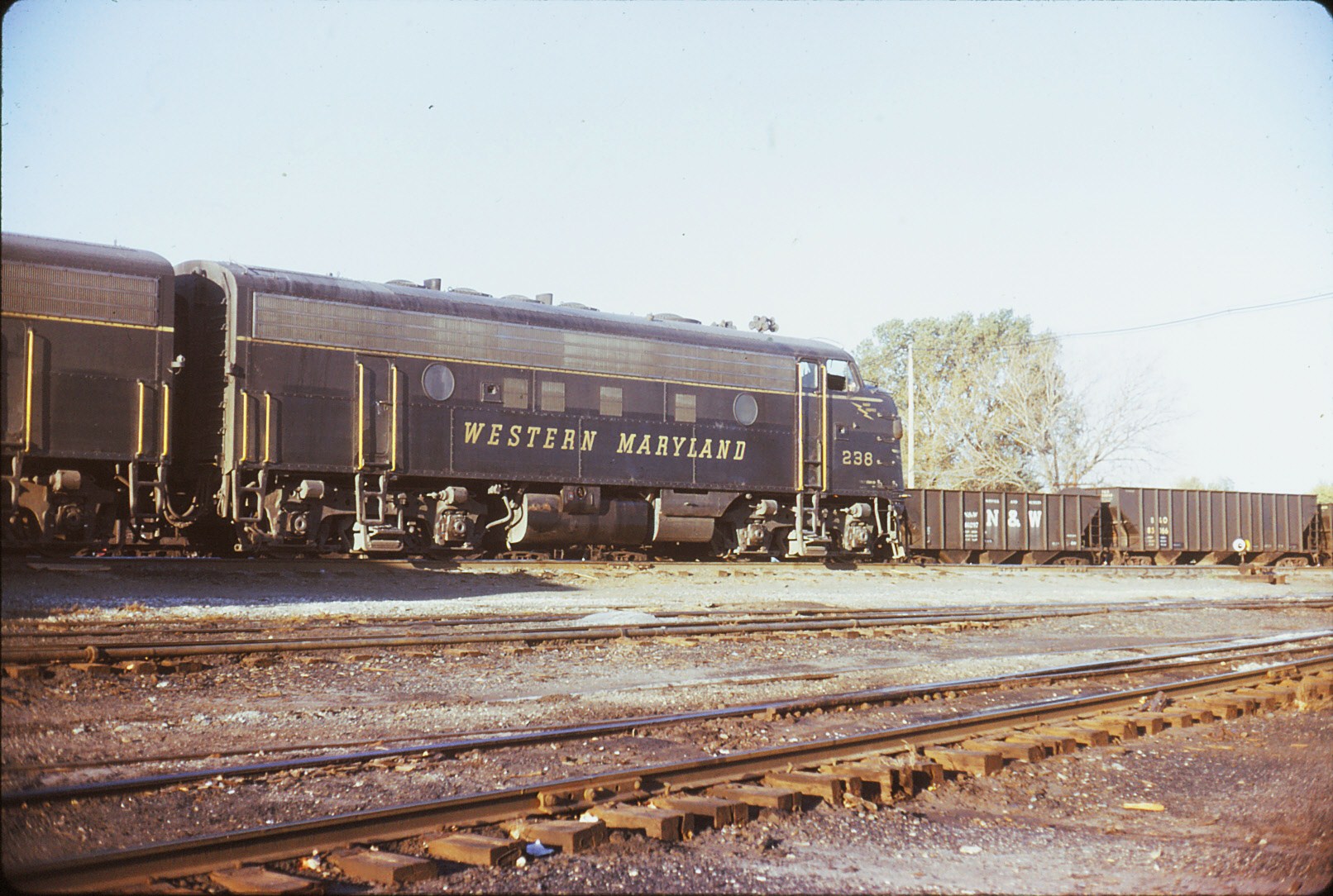
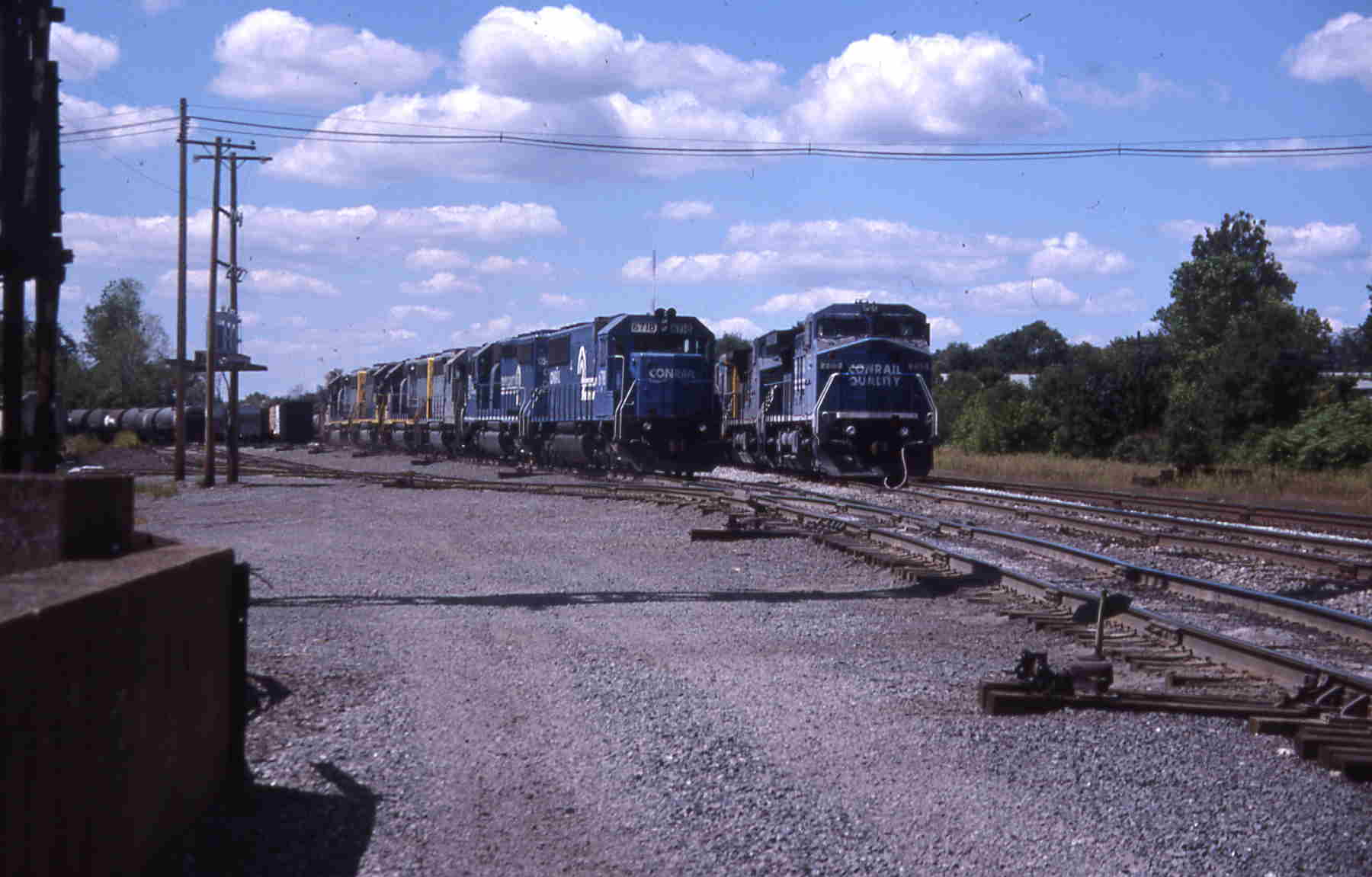
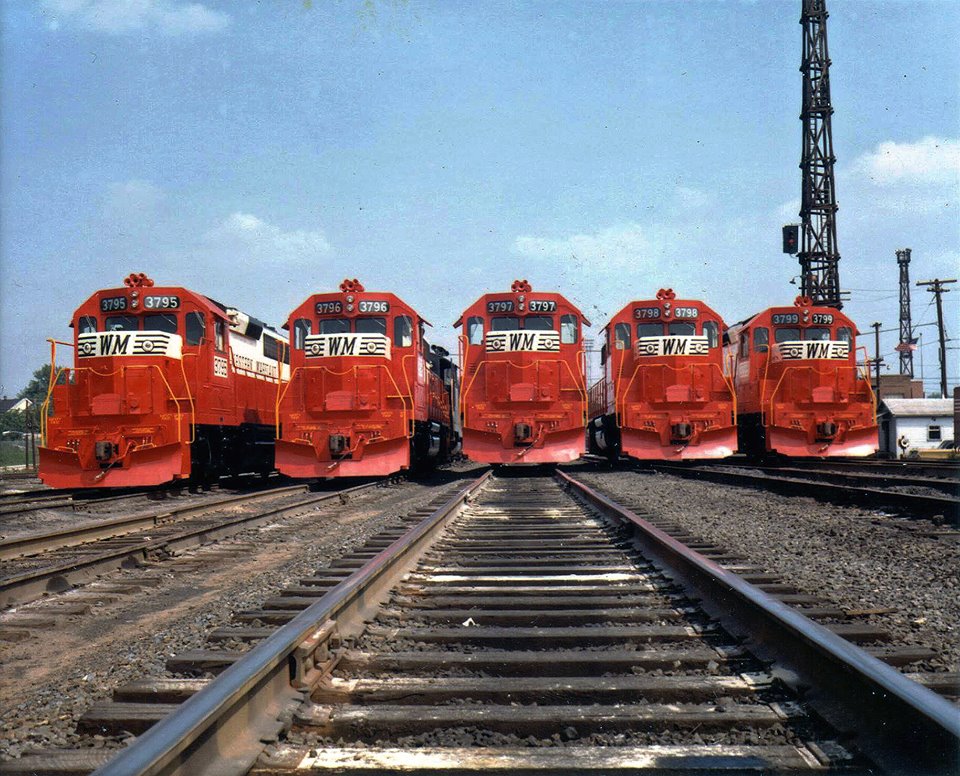
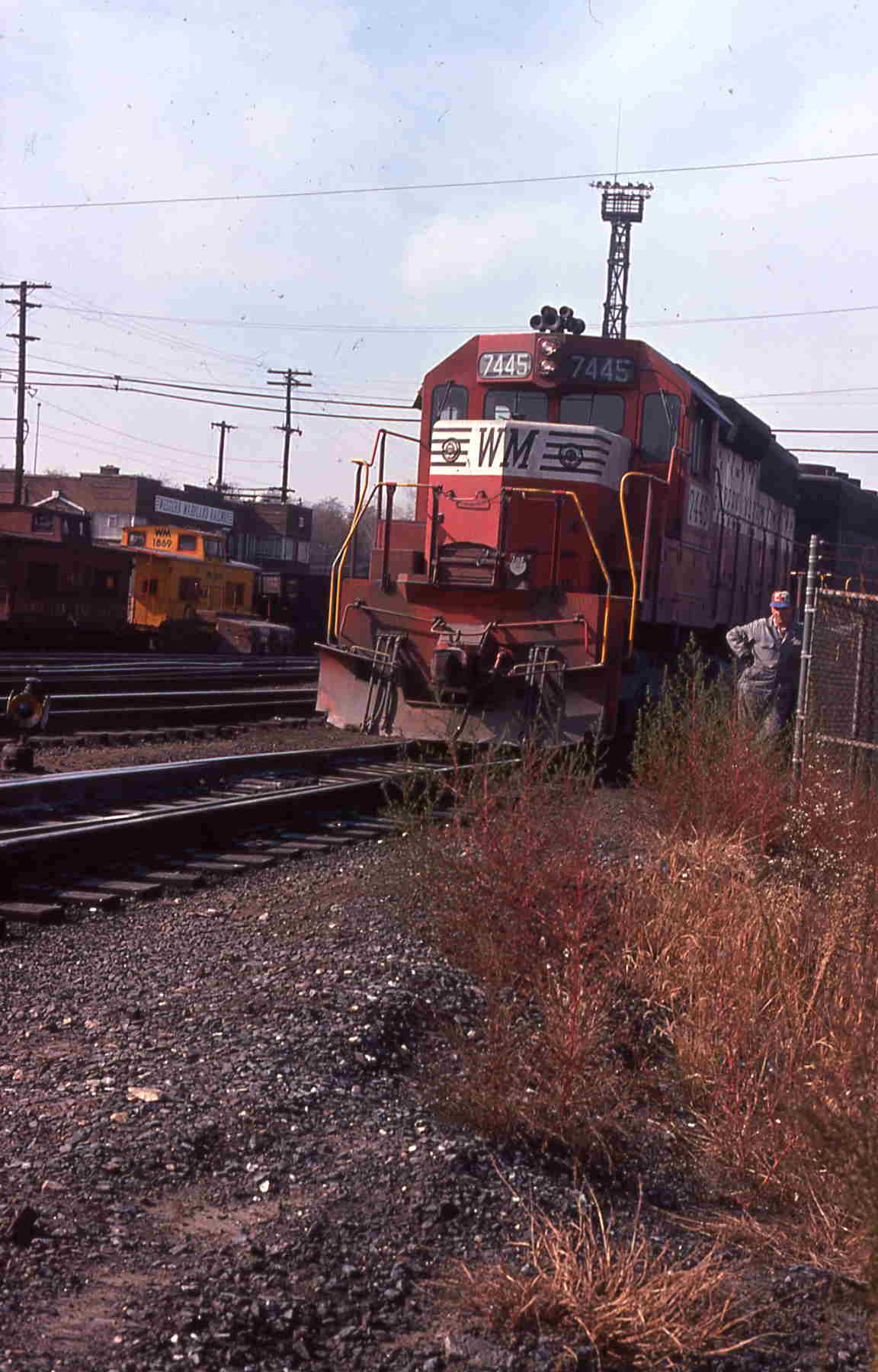
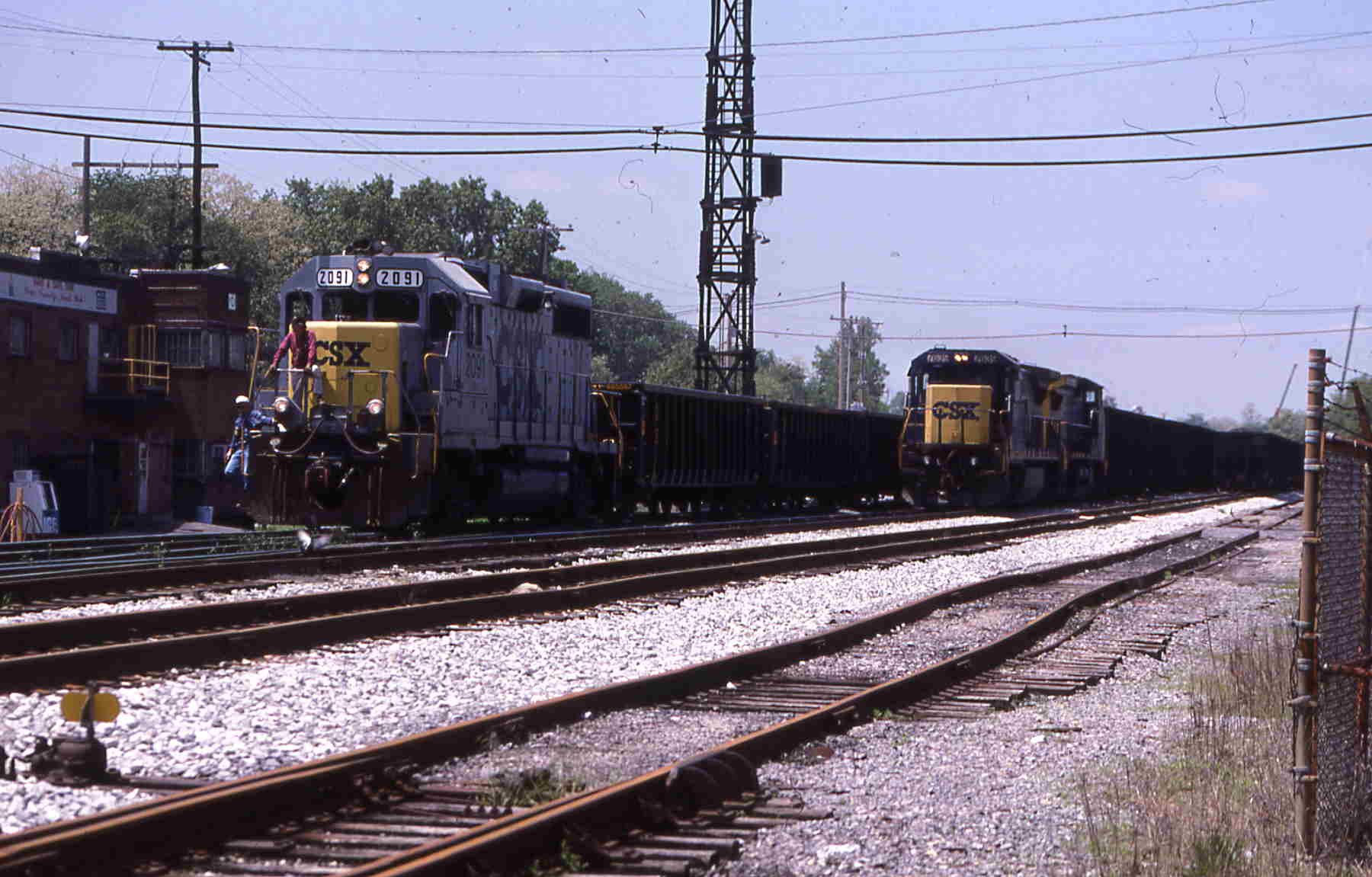
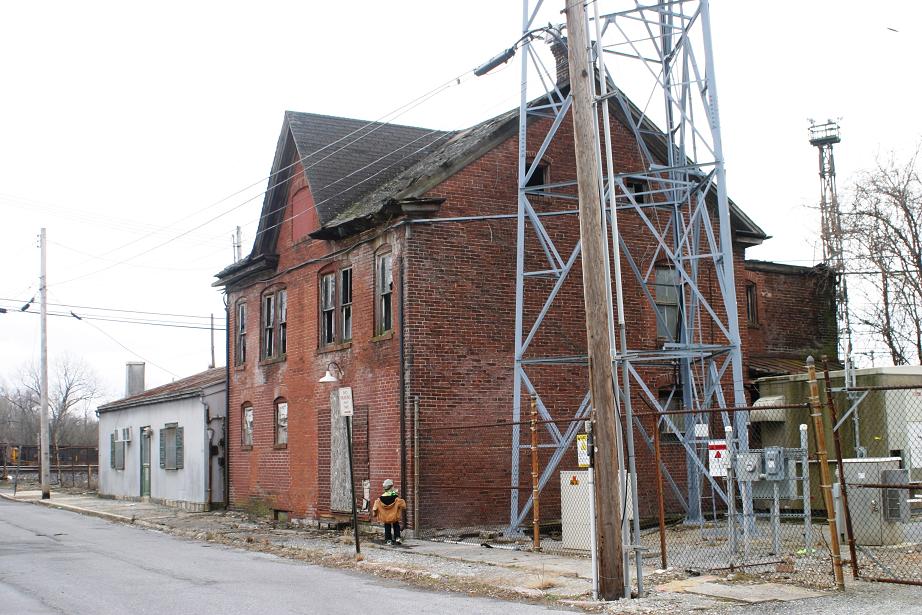
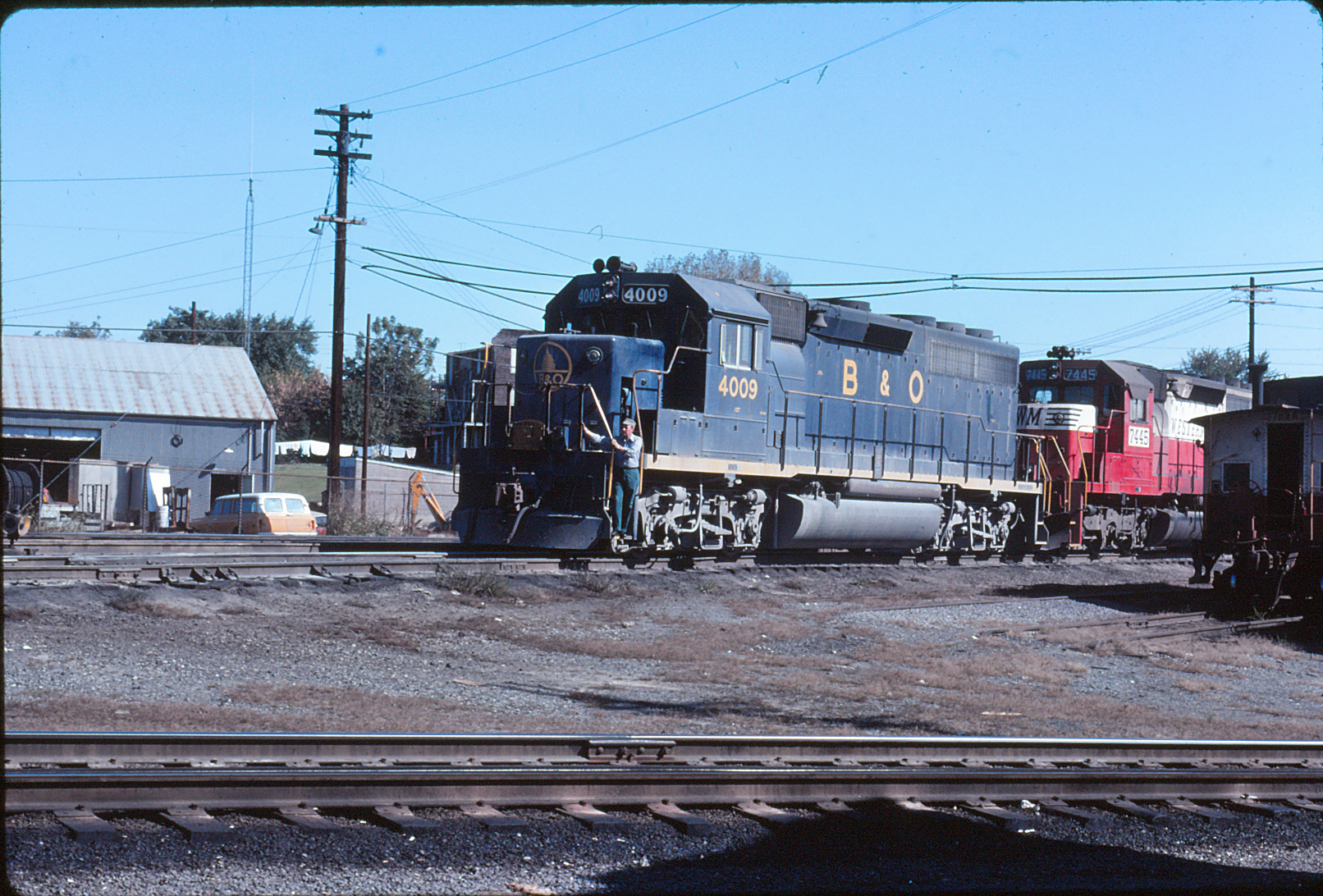
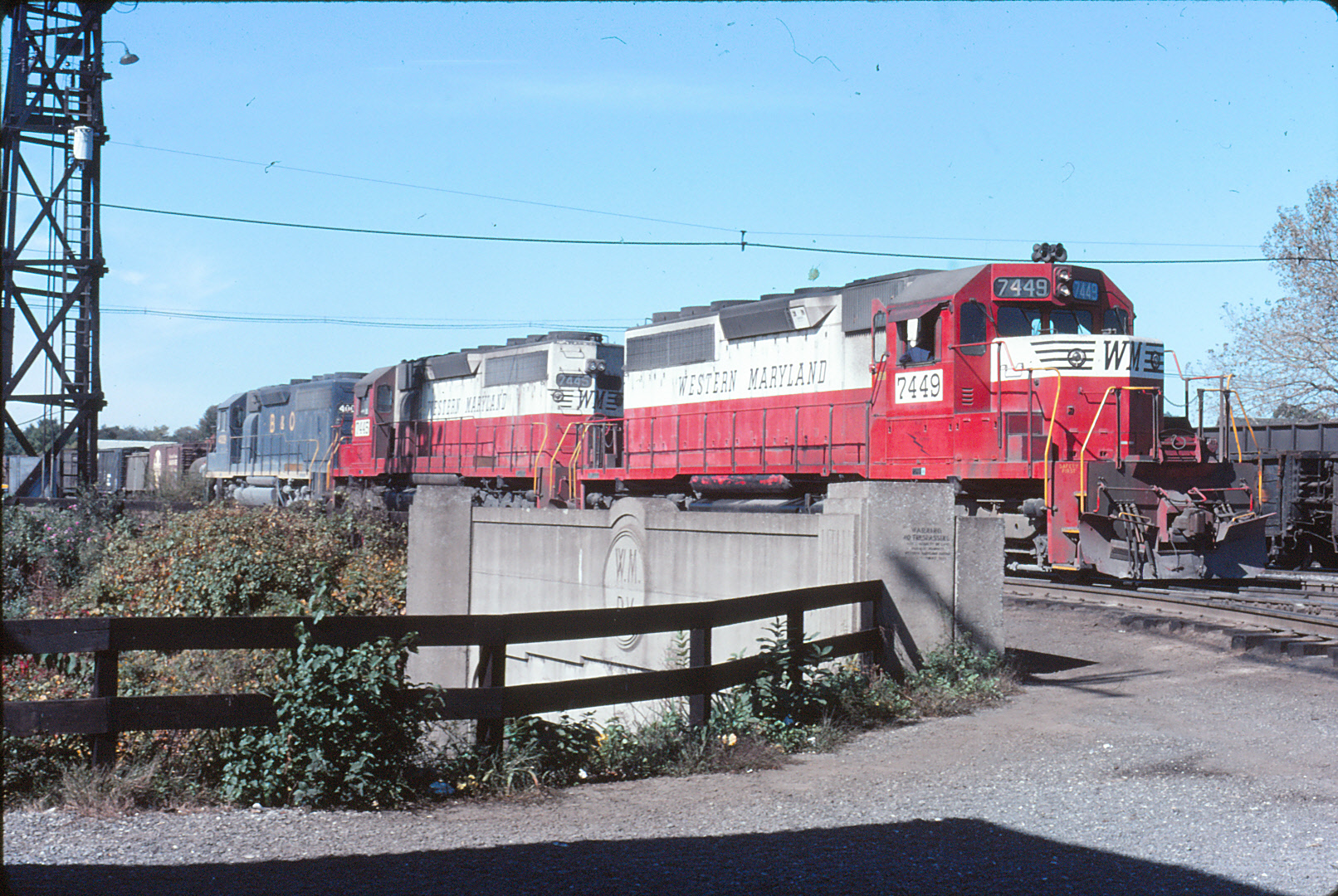
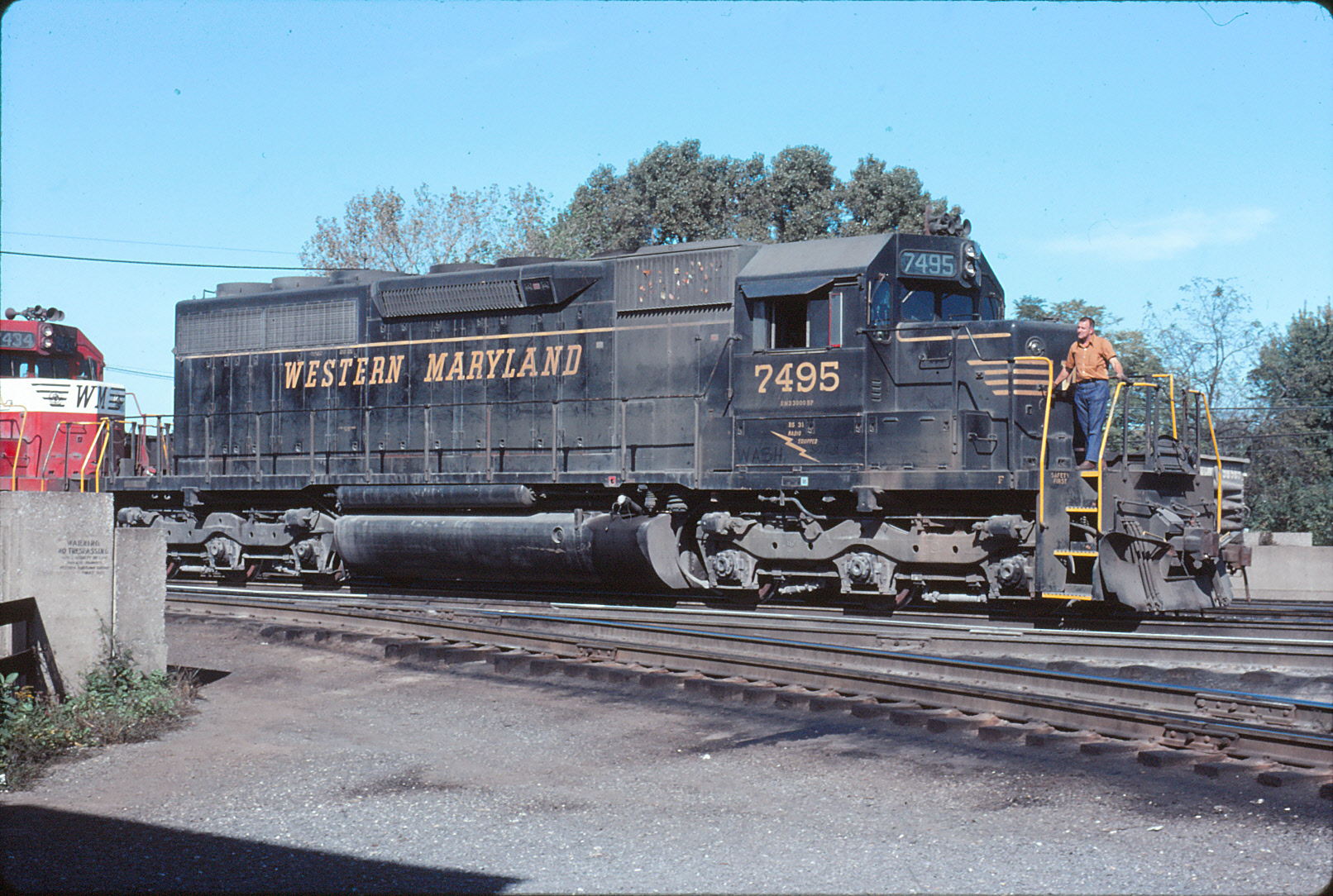
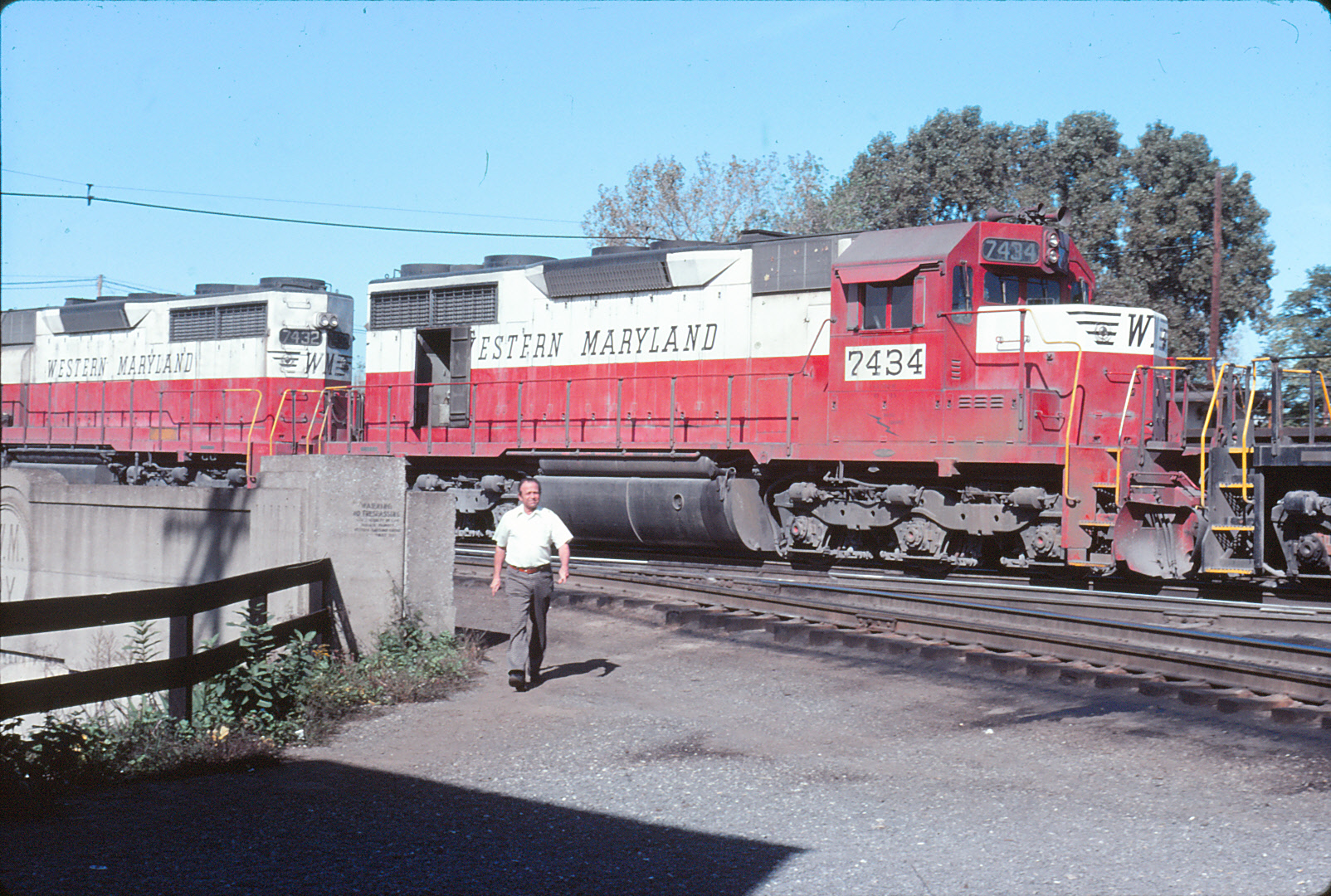
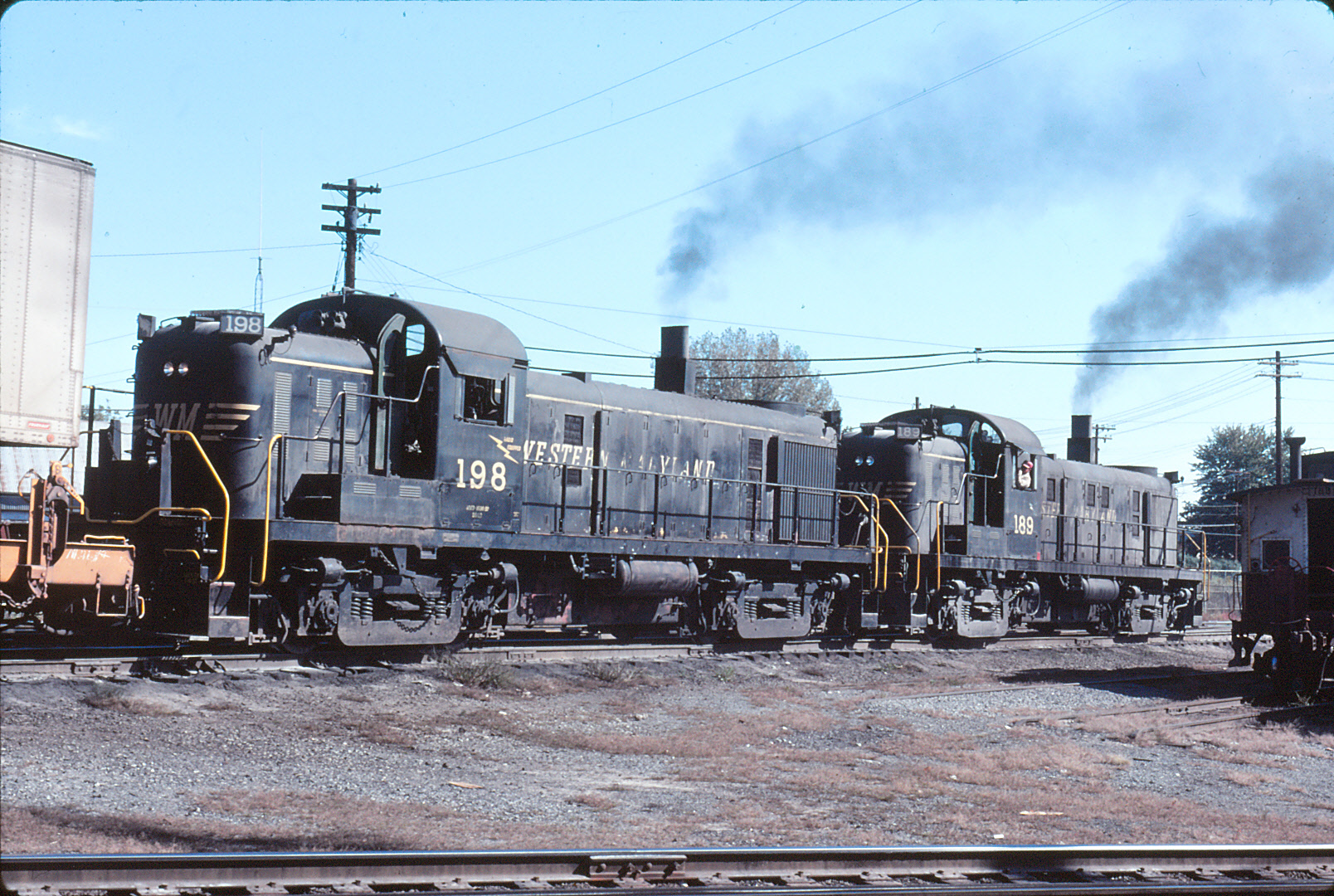
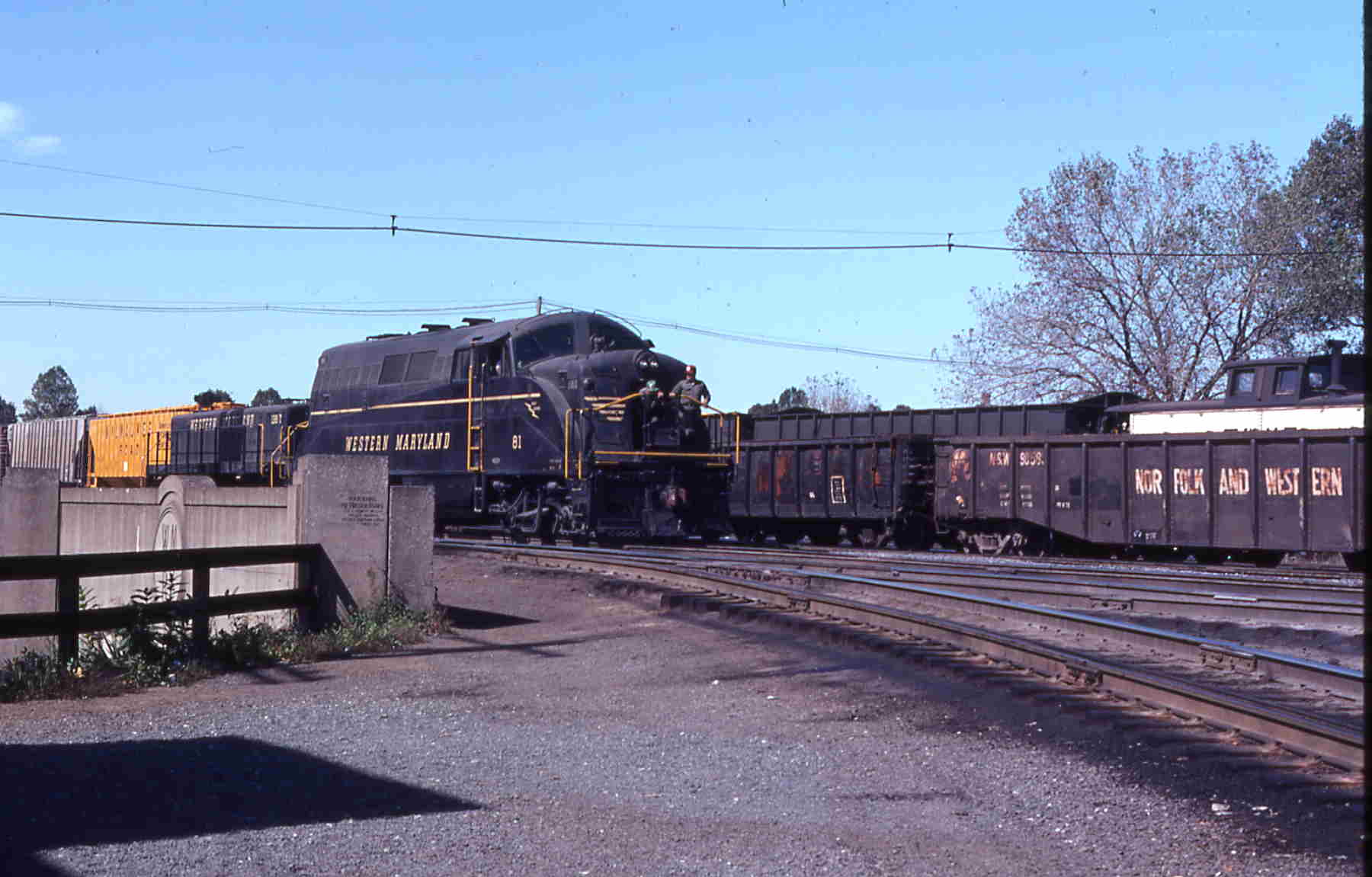
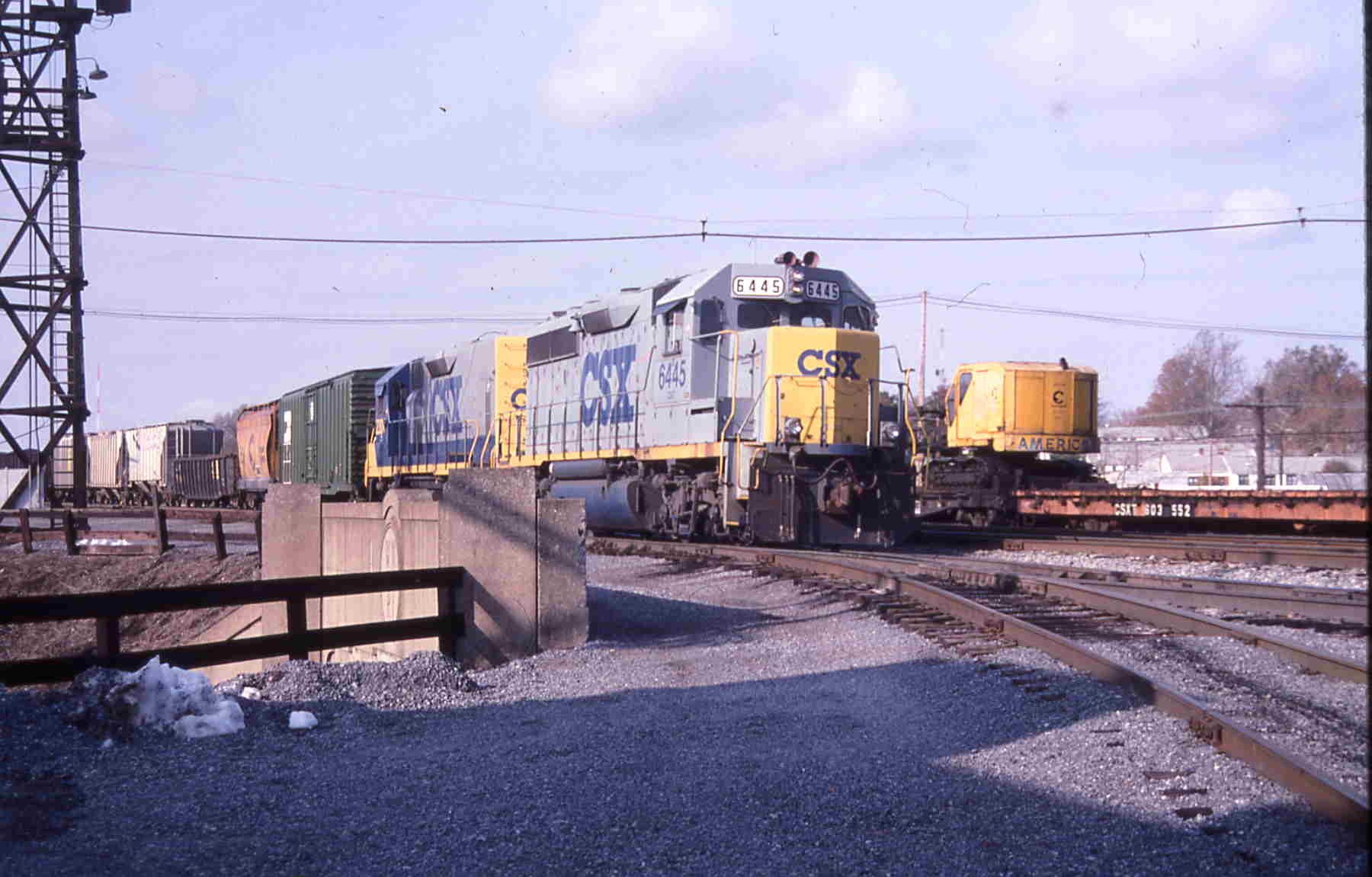
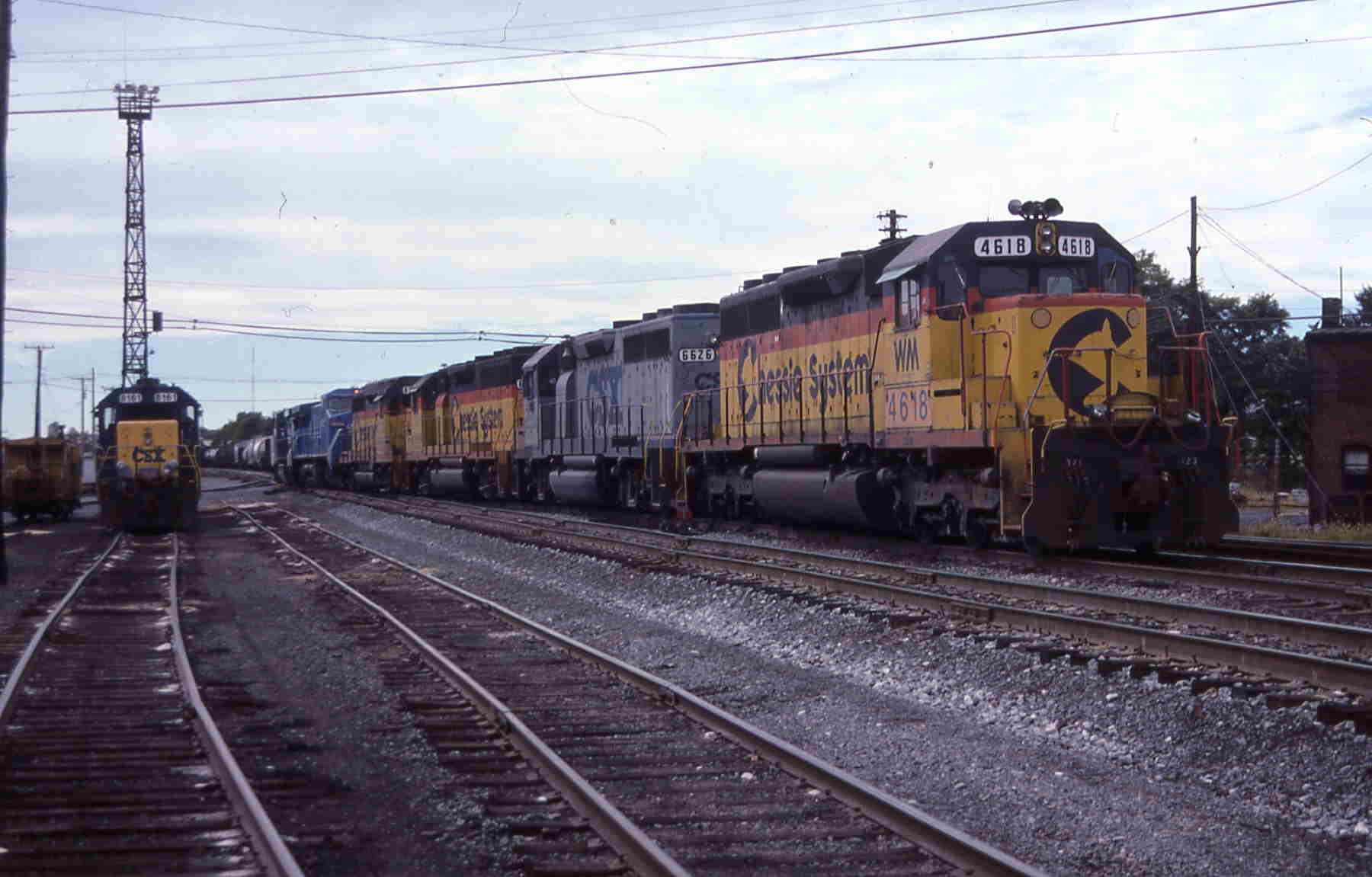
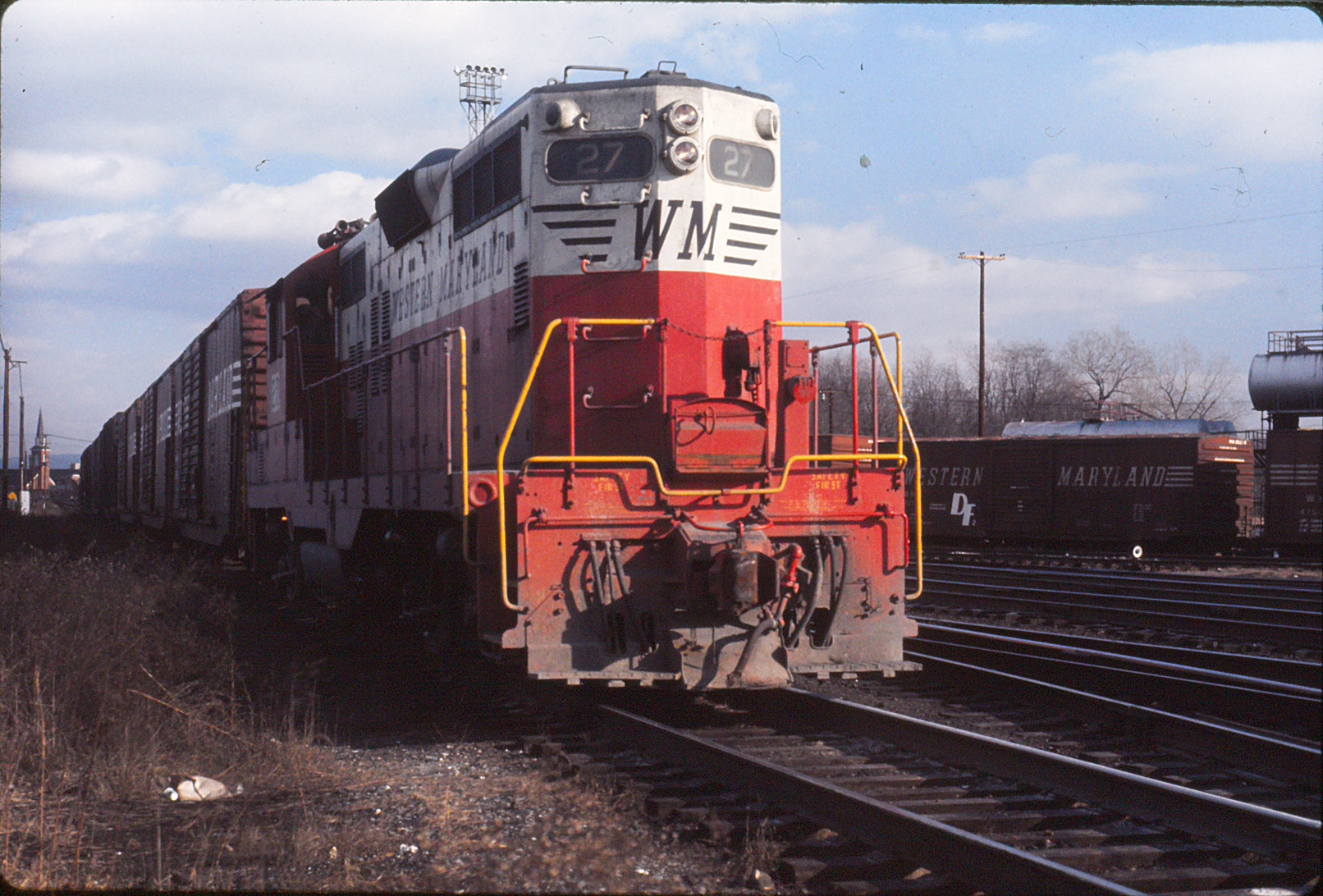
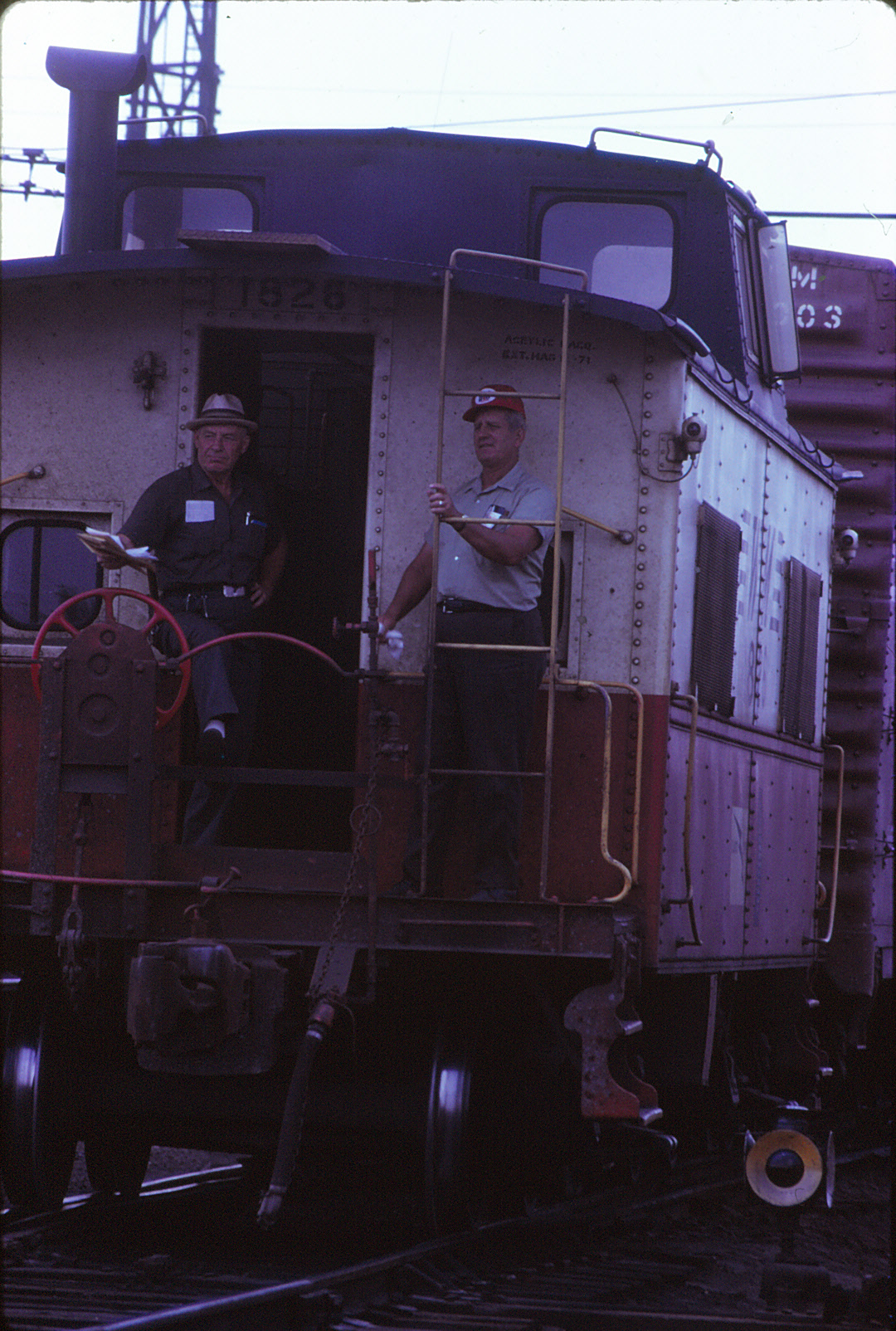
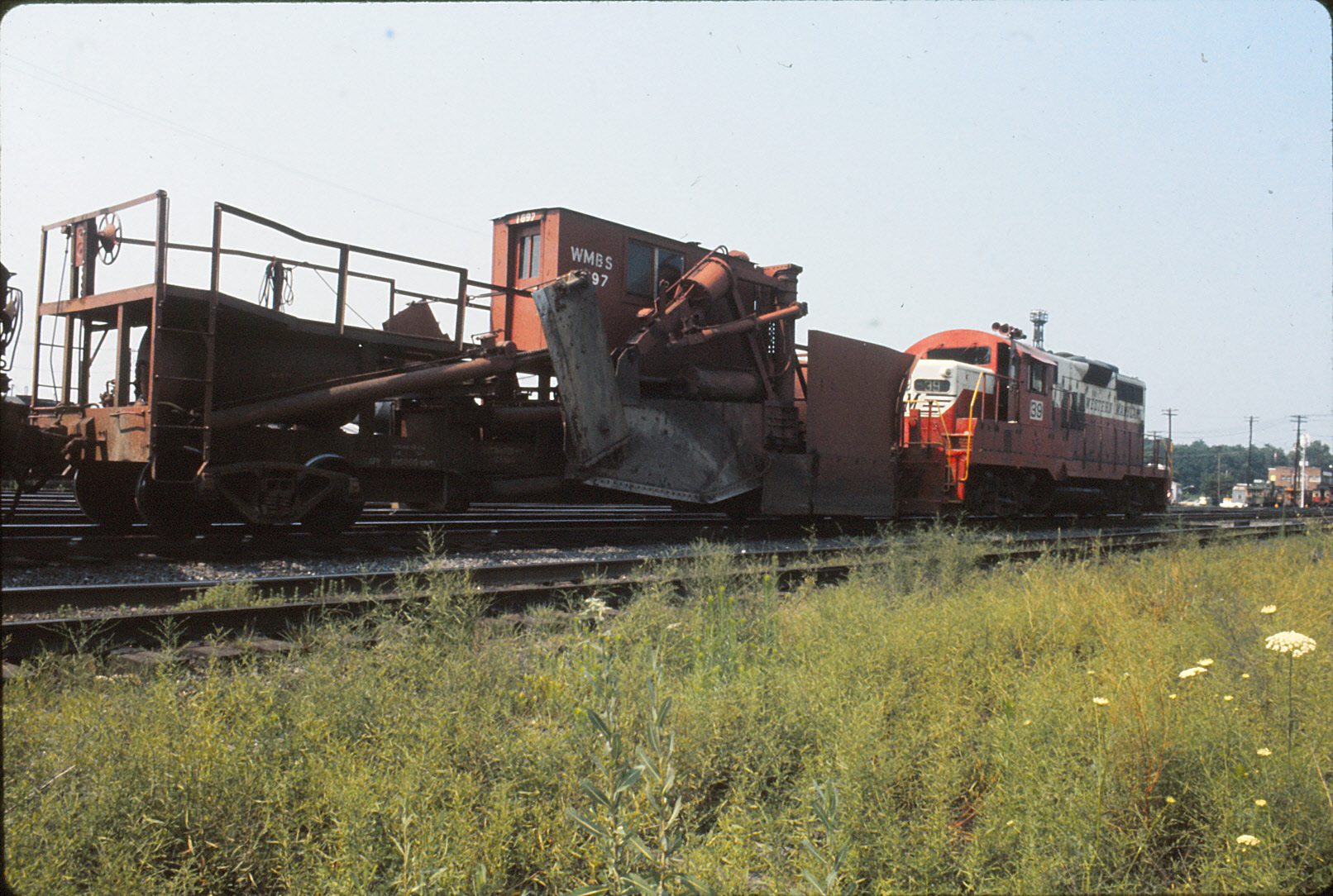
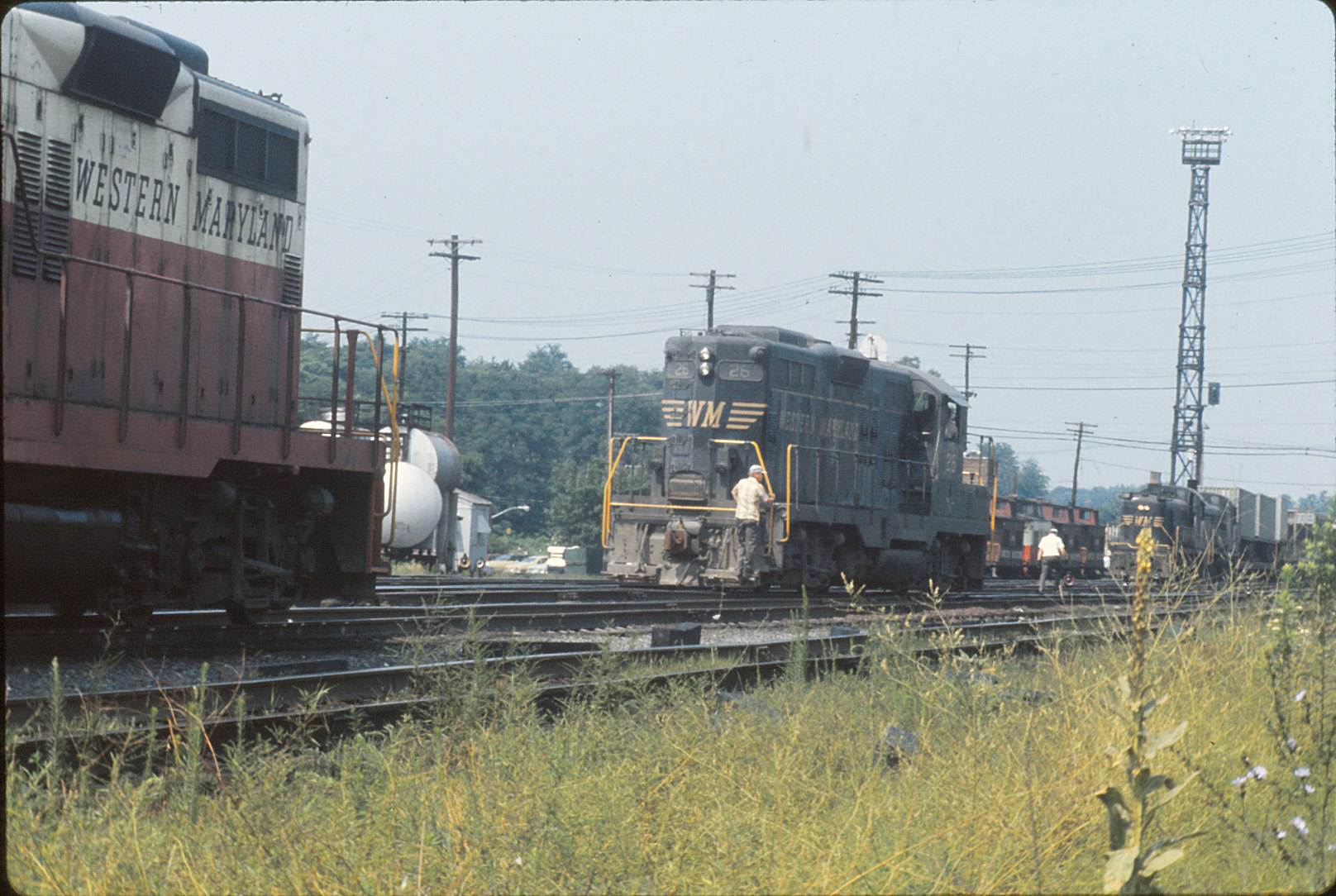
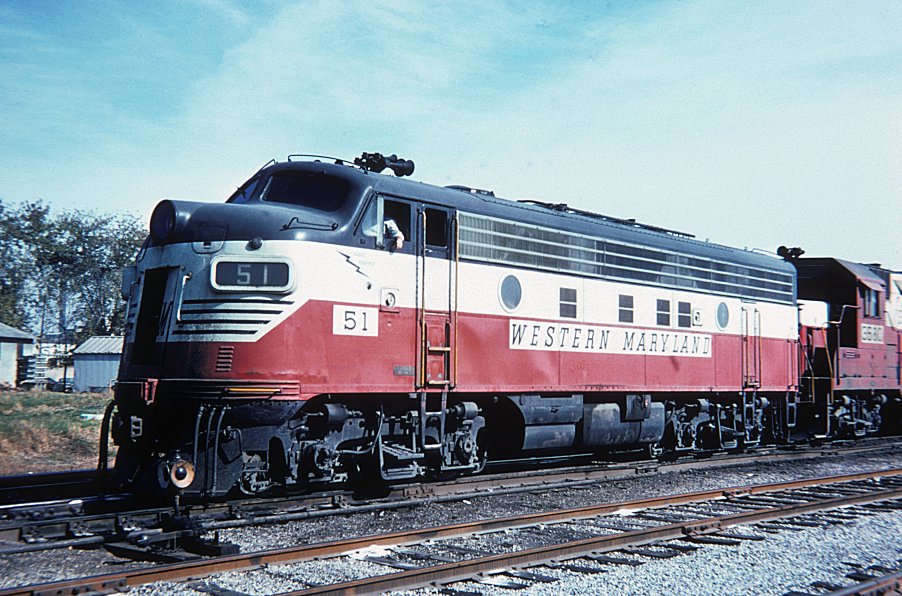
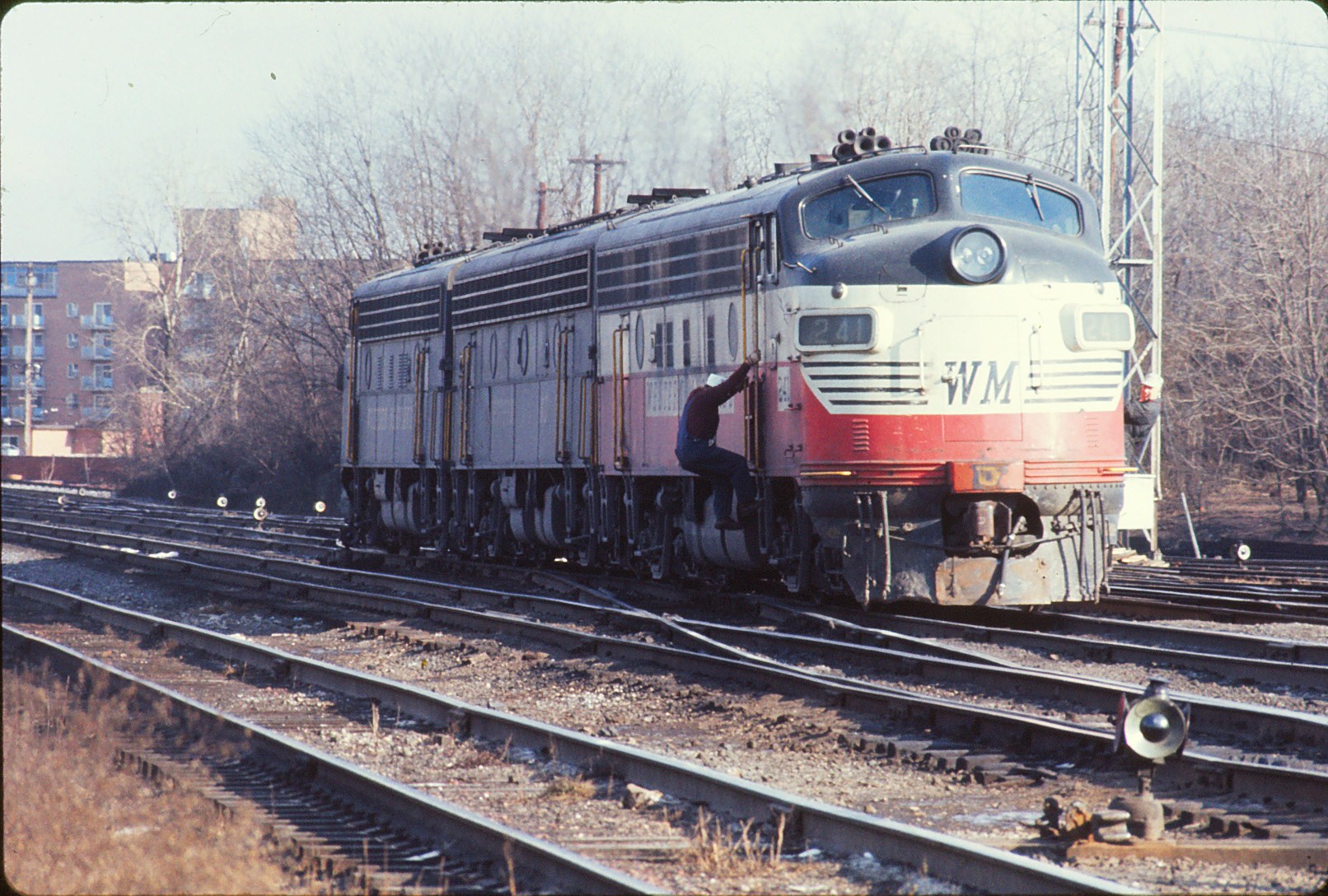
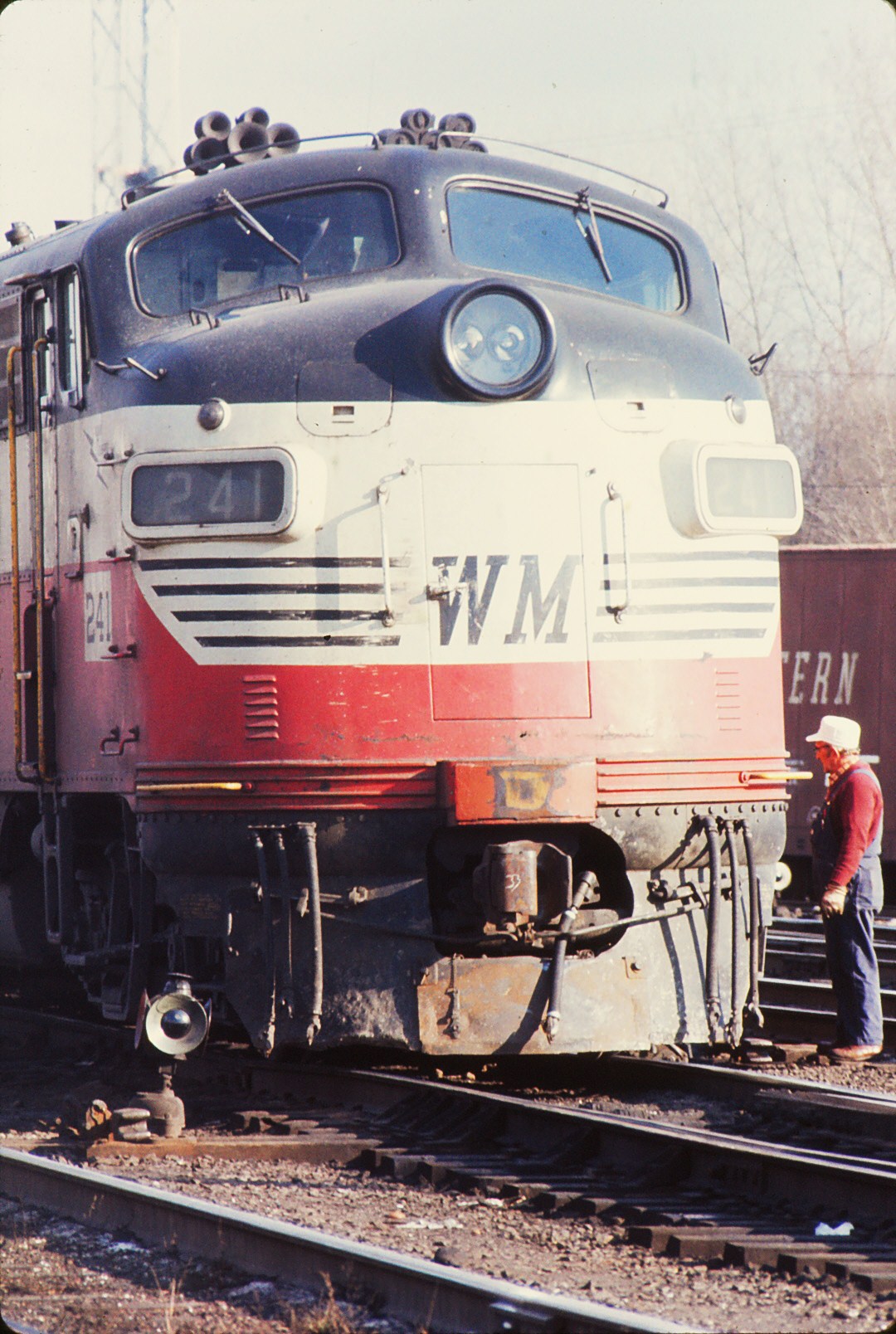
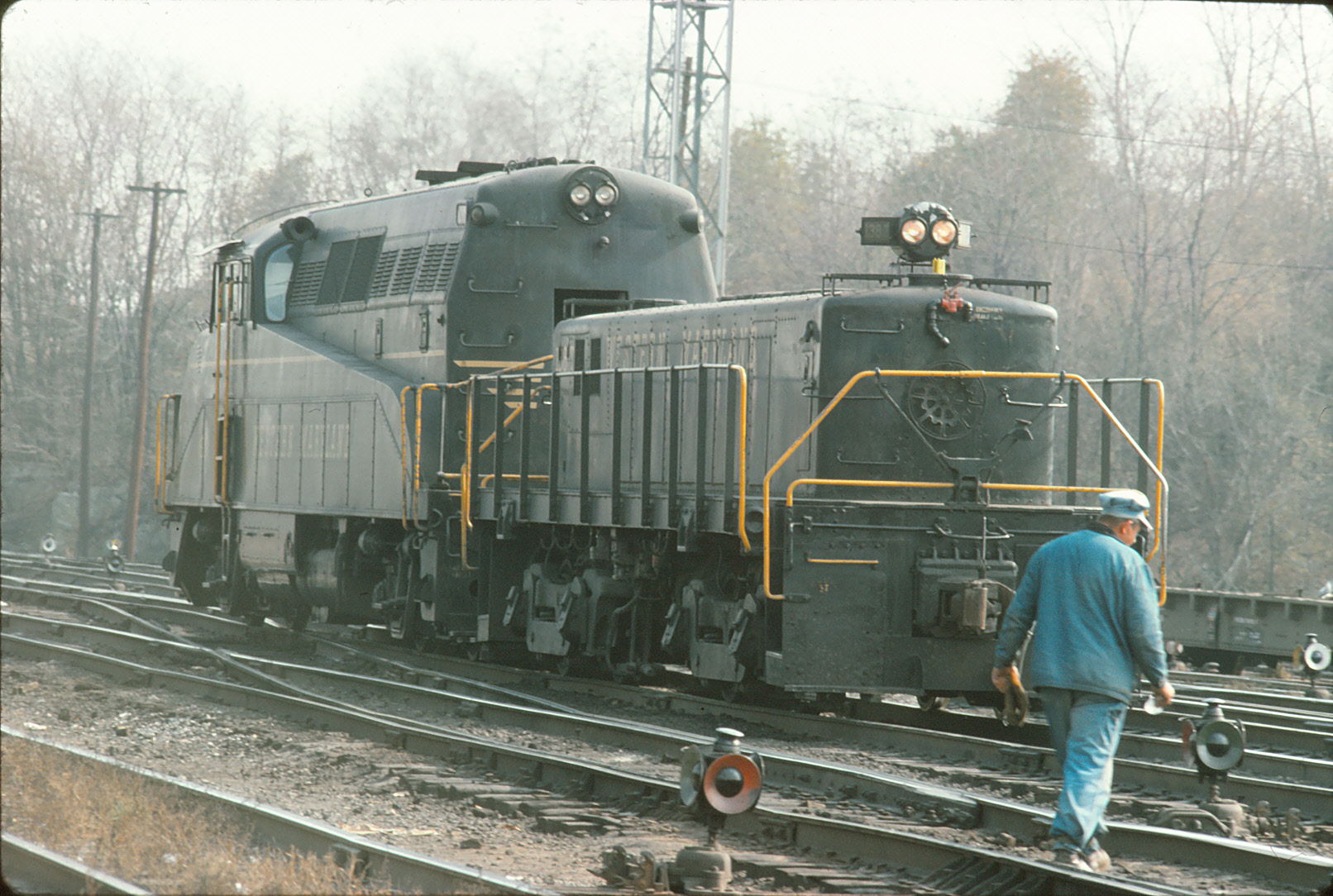
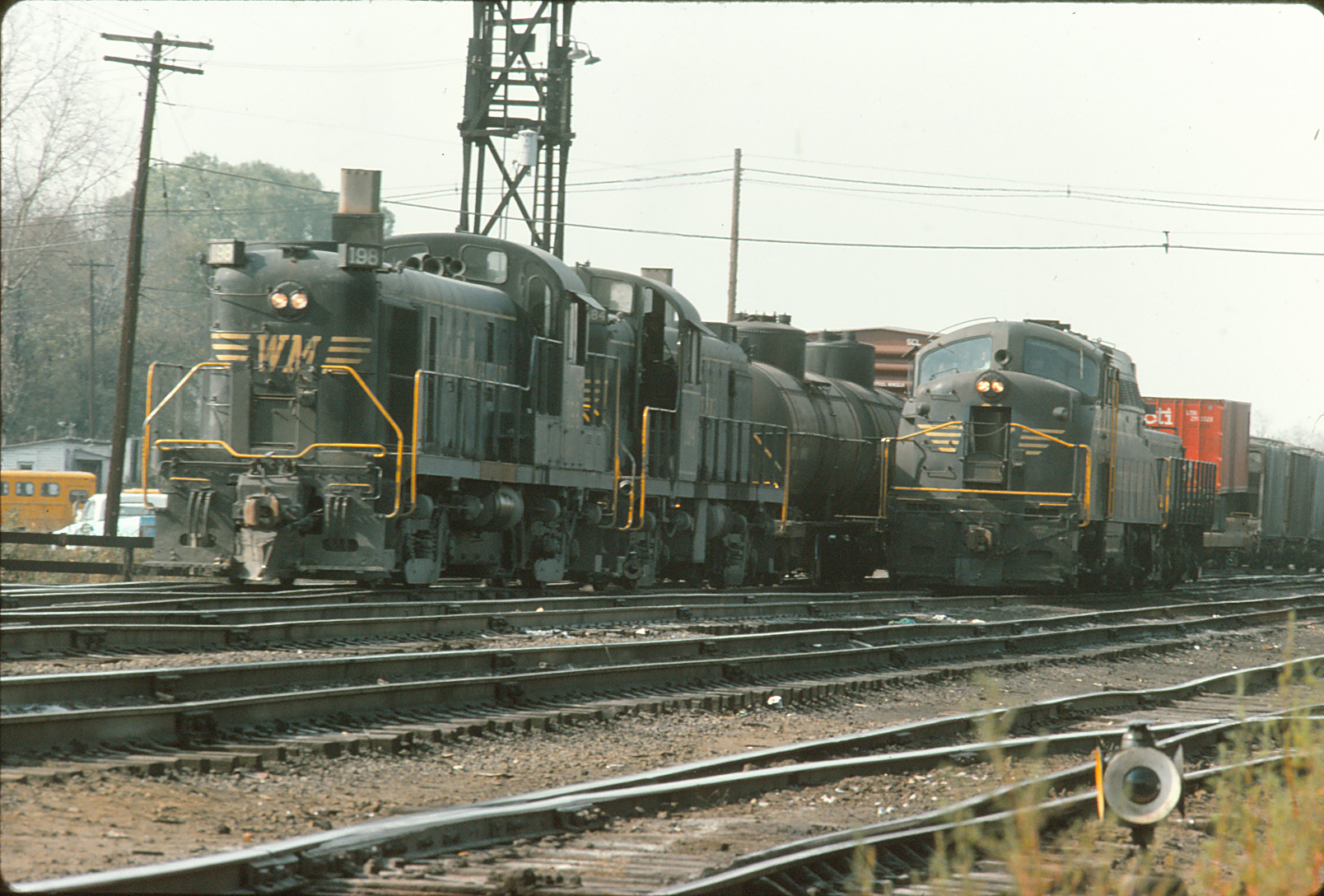
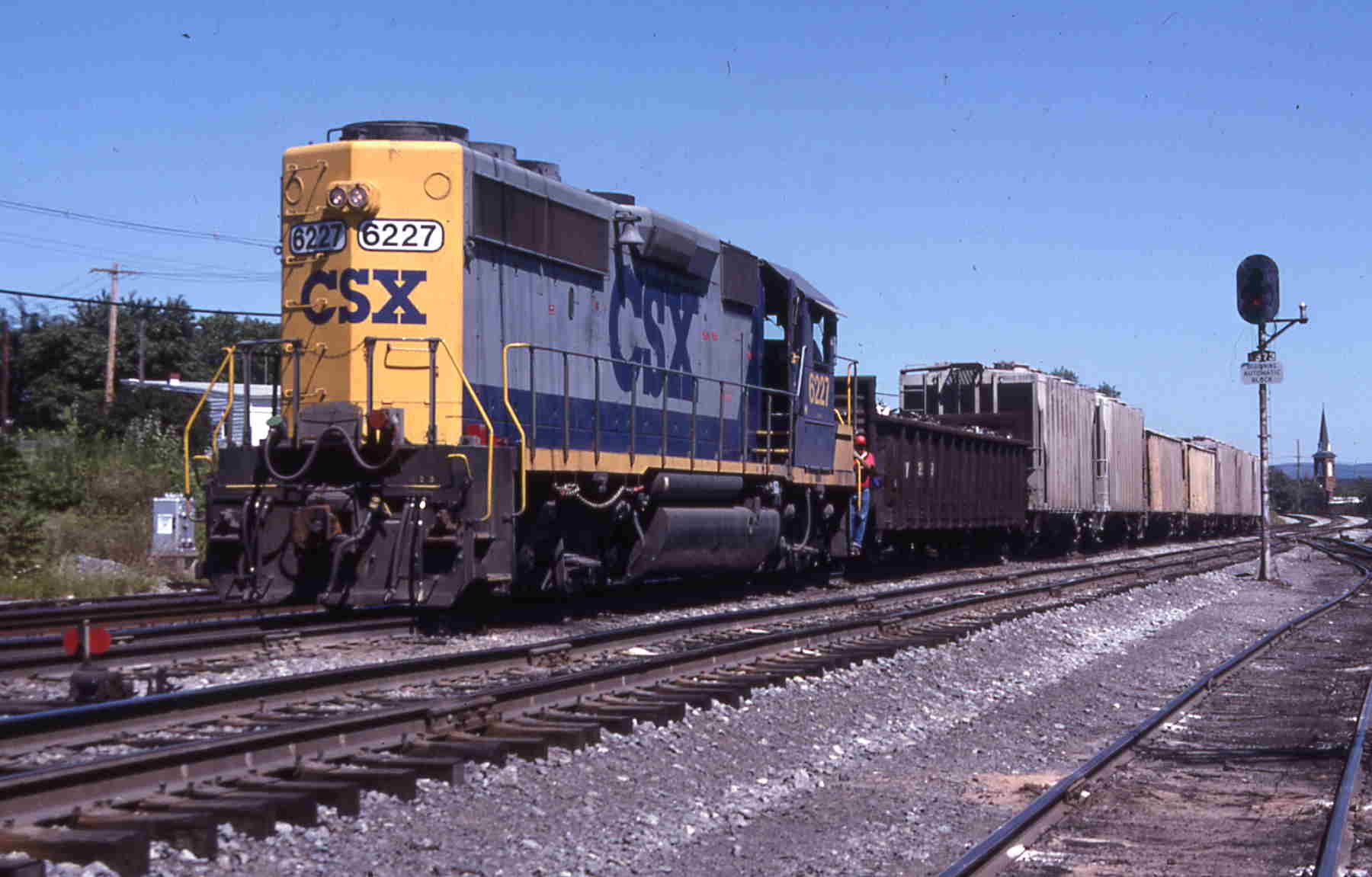
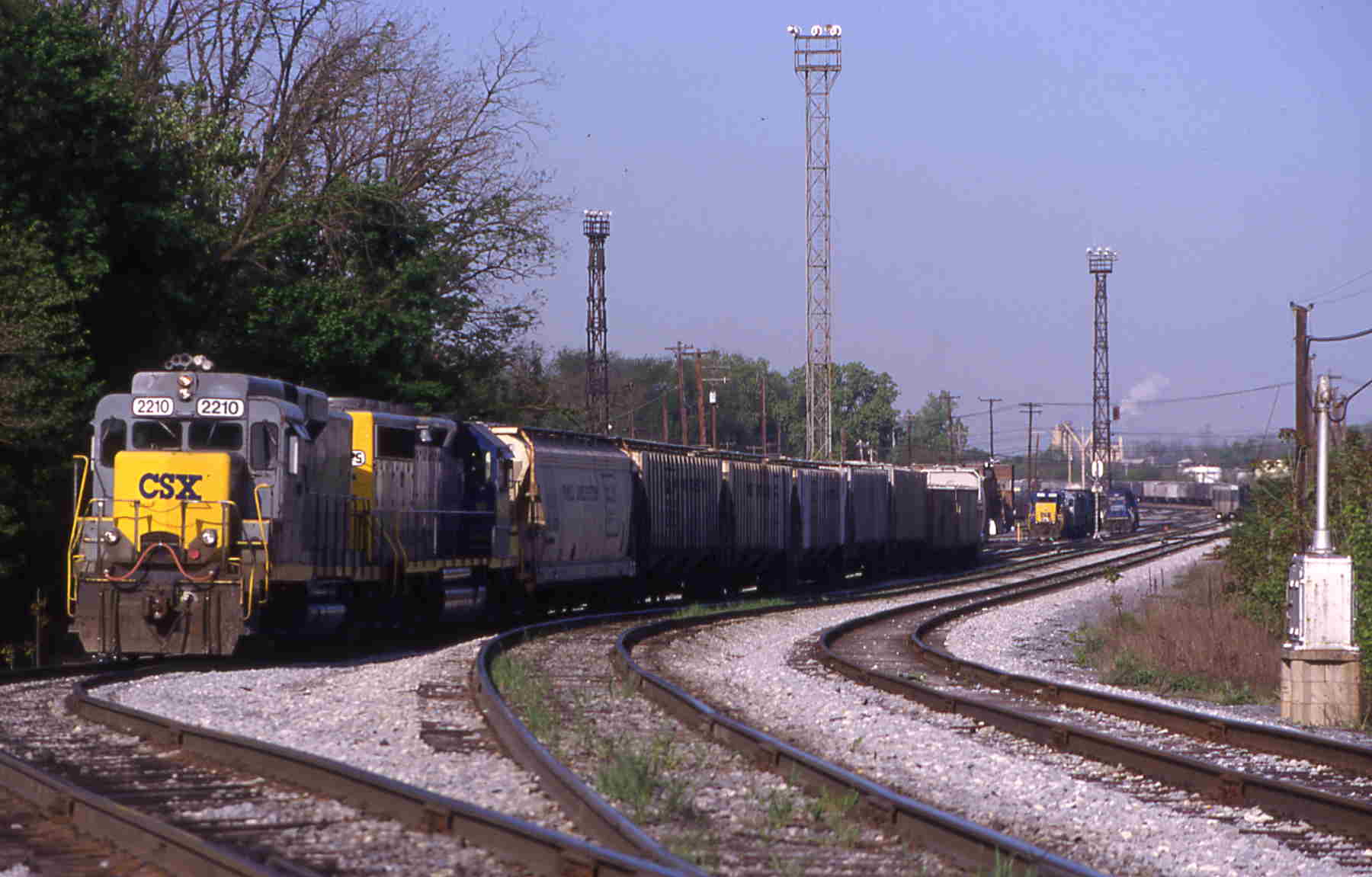
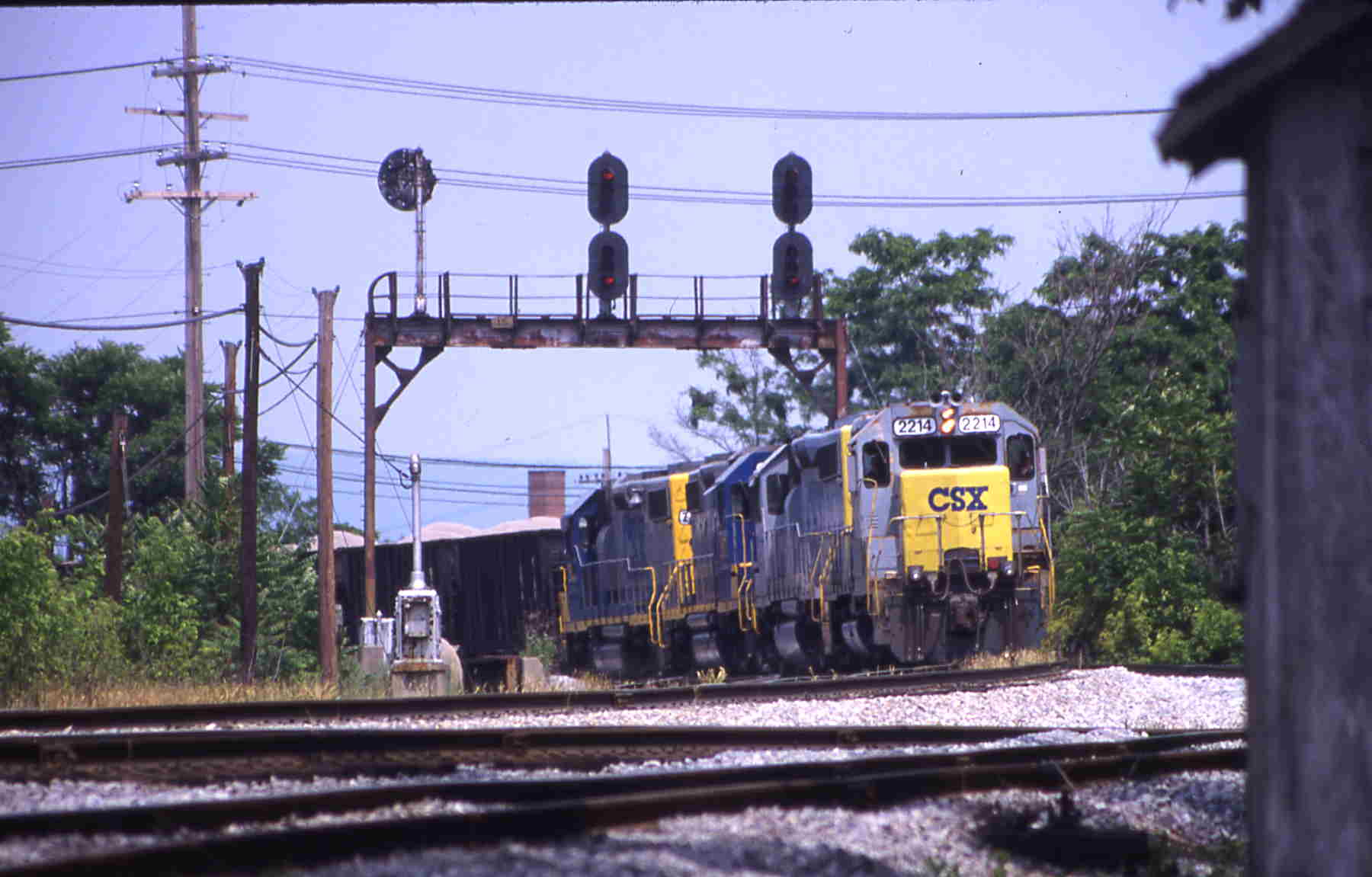
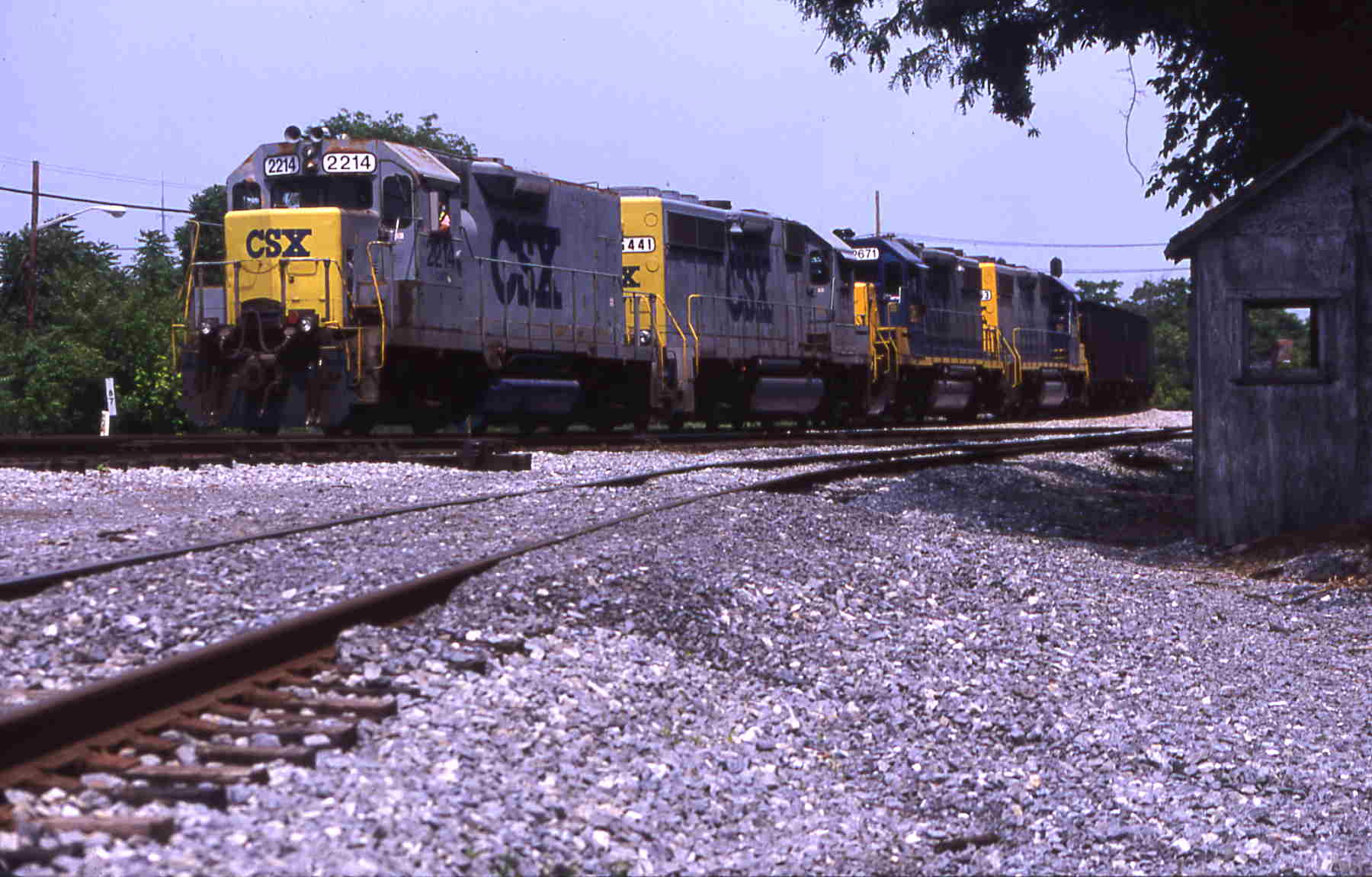
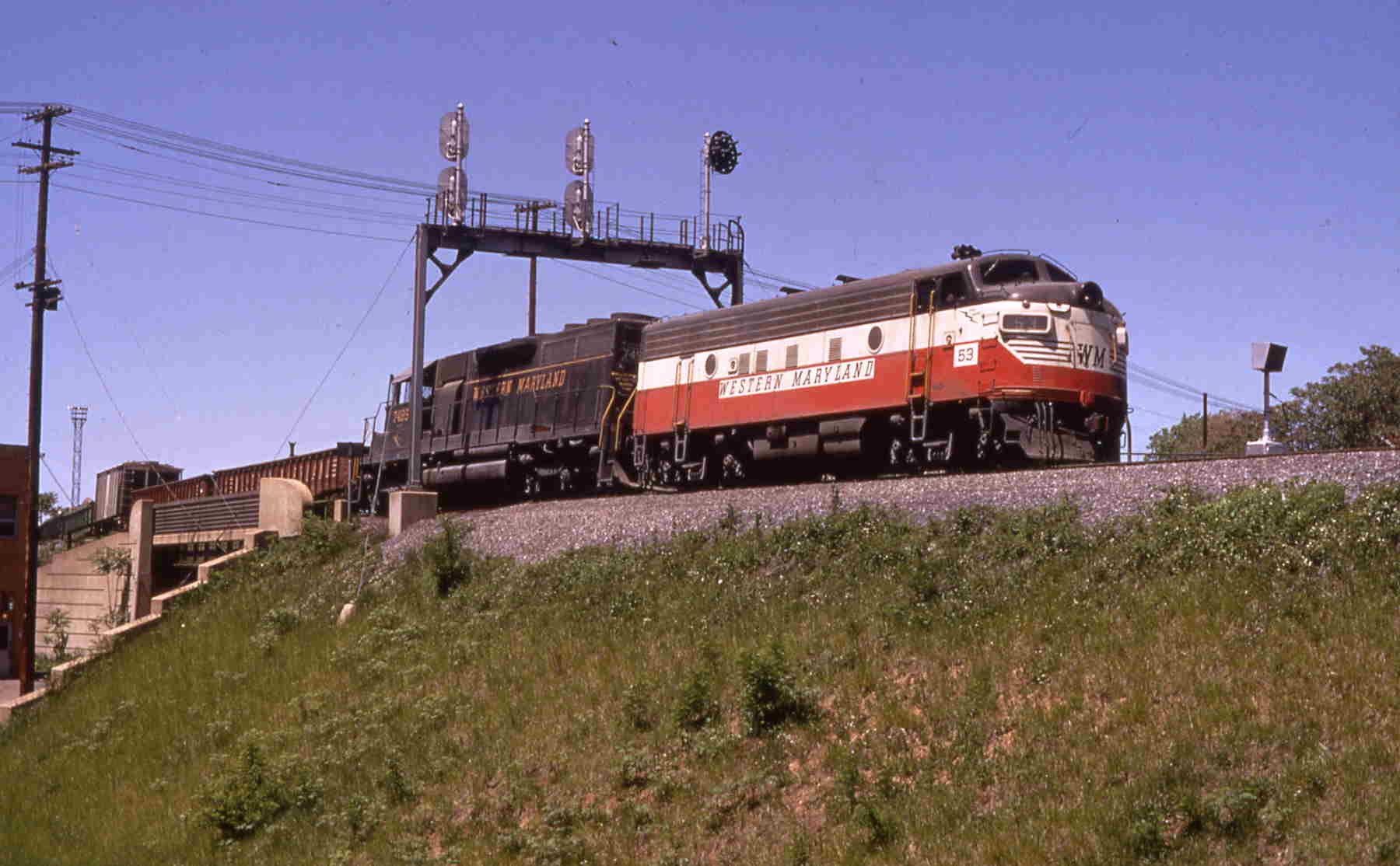
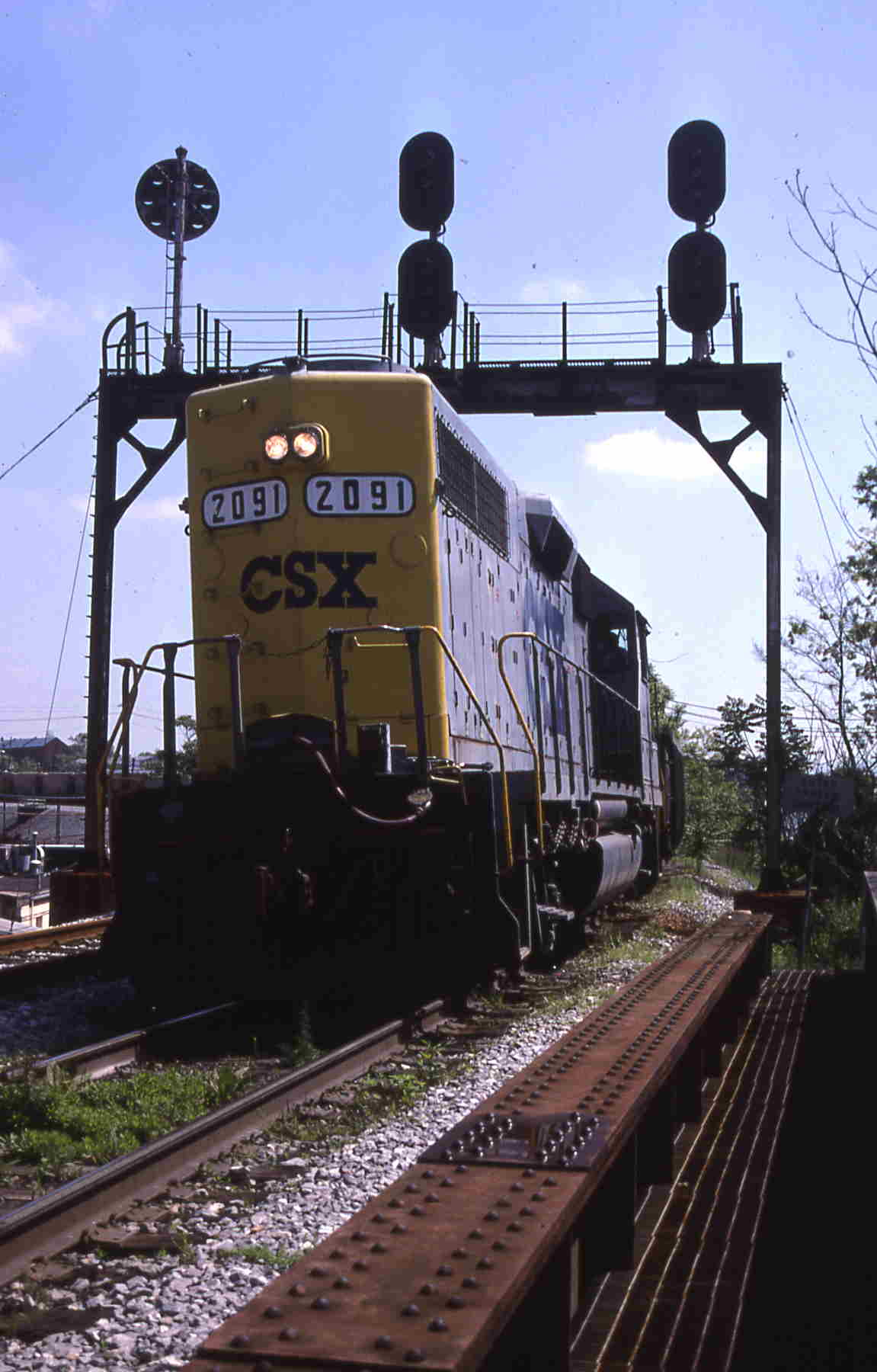
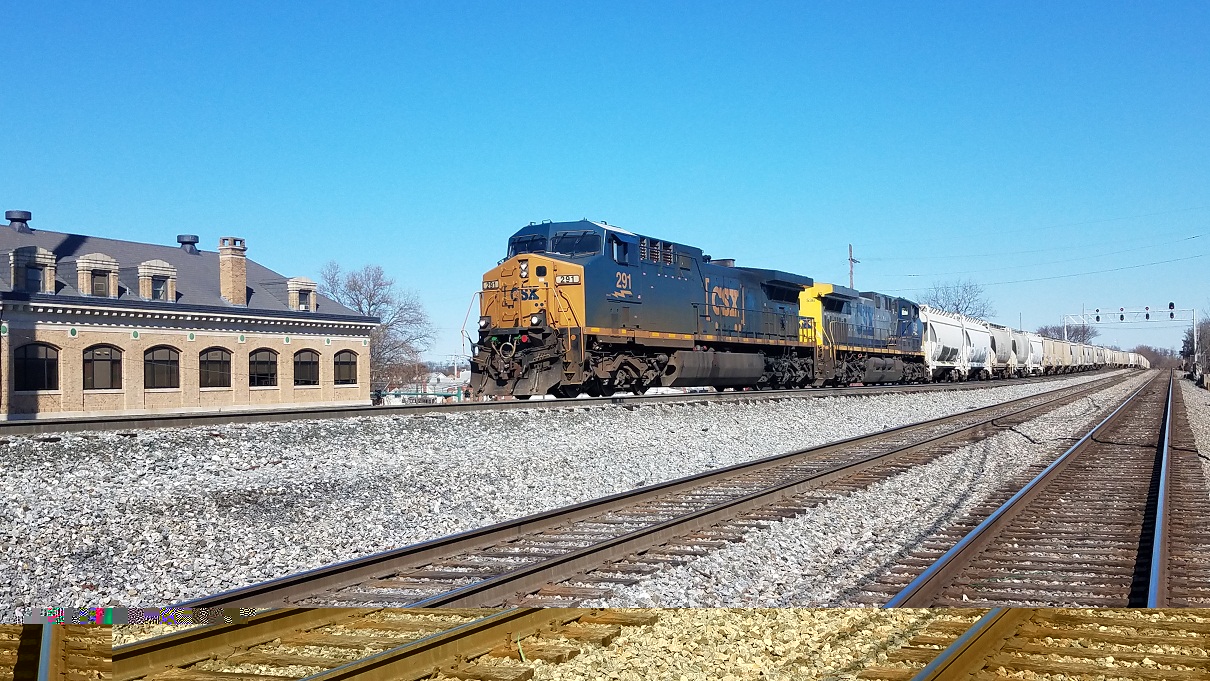
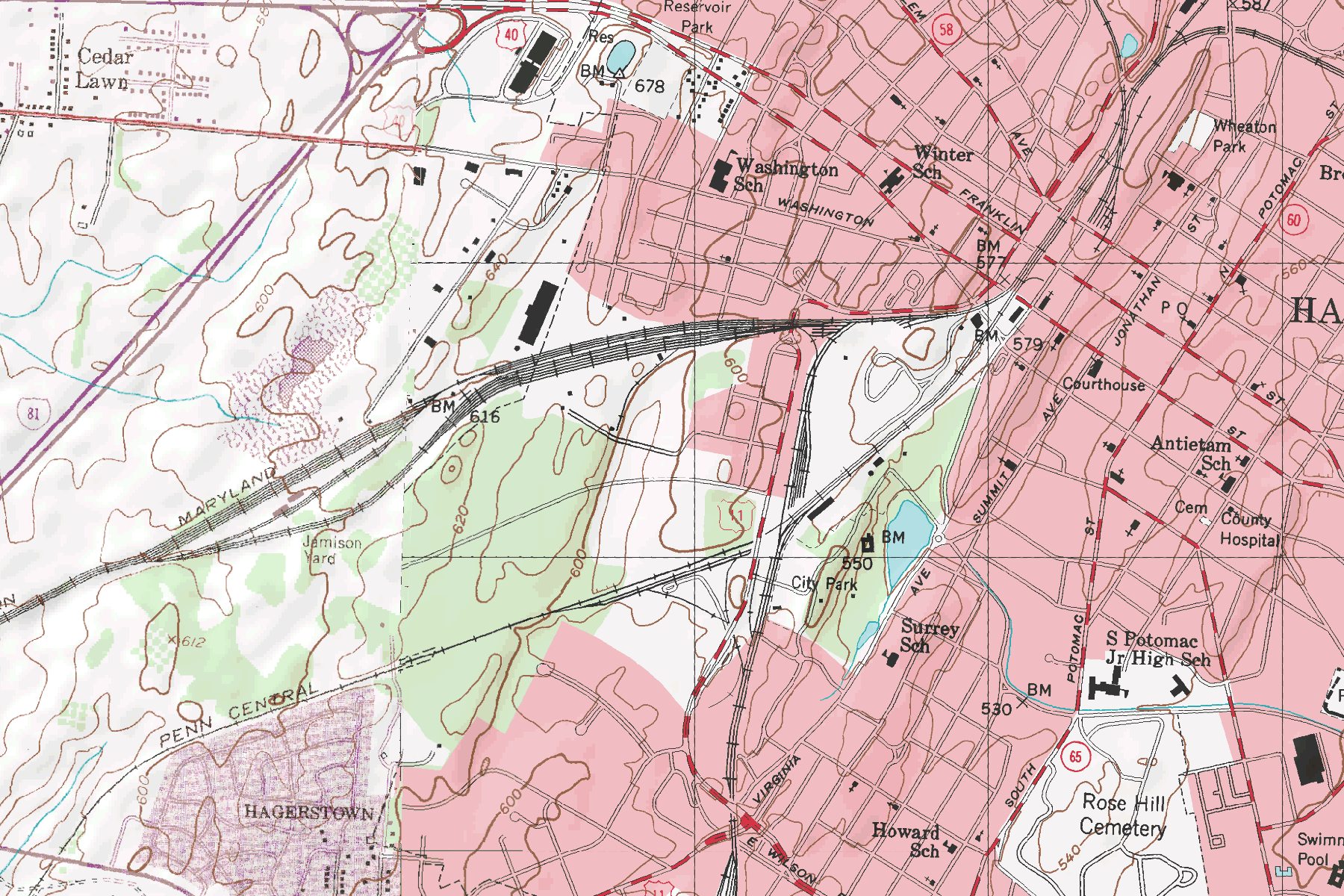
 Hagerstown was the most busy place on the entire Western Maryland. Practically all WM trains passed by here. All west bounds from Baltimore and Lurgan as well as all east bounds off the West Sub kept the short stretch of main line busy between Hagerstown and the Lurgan and Hanover Subdivisions at Town. At Hagerstown there was also a connection with the Norfolk and Western Railway, Pennsylavania Railroad, and the Baltimore and Ohio Railroad which had a branch into Hagerstown from Brunswick, MD. This branch of the B&O's was later removed when B&O assumed control of the WM through the Chessie System. This was perhaps the only time the WM was kept and the B&O abandoned during the Chessie takeover. Hagerstown was also the main locomotive shops for the Western Maryland during the diesel era. Locomotives received major repairs, overhauls, and general maintence. Locomotives were also washed and refueled here as well. This went on up until the early 1980's. After then all maintence was transferred to the B&O's Cumberland Locomotive Shops. Hagerstown was also the site of the large Jamison Yard. Jamison Yard was built to the west of the yard office. The yard had a hump also to sort cars onto tracks separate. The hump was the middle of the yard and the summit of the 1.08% grade of Williamsport Hill. The eastern slope of the yard was similar with a grade of 0.80%. Locomotives had a tough time pushing a large cut of cars over the hump. The yard was removed track by track as thru traffic dried up. Today Hagerstown is still perhaps the busiest portion of the old Western Maryland. Trains from Cherry Run still run up a small portion of the West sub. About half of the Lurgan Sub remains and usually sees one train a day. The Hanover Sub is still pretty much intact and operational. There is a connection with the Maryland Midland Railway at Highfield which operates the former WM East Sub. CSX exchanges cars with the MMID regularly. A day at Hagerstown can be a good photo opportunity if you arrive early and chase any train that is called to run out on any of the three subdivisions.
View Larger Map |